 Skip to main content
Ospreys score a W&M campus first at Zable Stadium in 2025
This story originally appeared on the Keck Lab's website. See the full story and read more about ospreys.
Of the many highlights of 2025, the success of Zable Stadium’s ospreys was most certainly near the top for the Keck Lab and their partners.
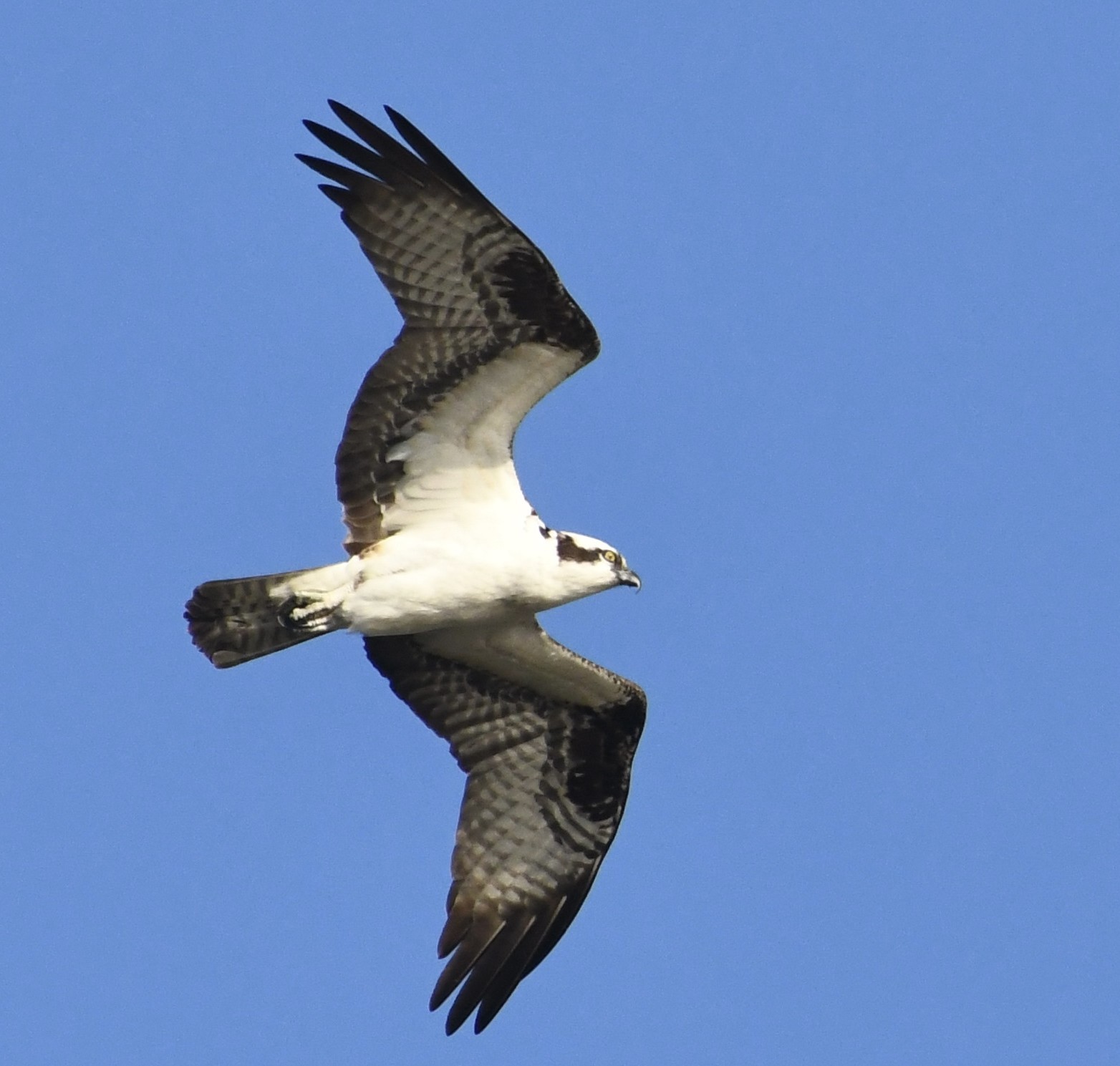
 Ospreys have long been a seasonal sight and sound in the College Woods around Lake Matoaka, but the charismatic "fish hawks” don’t usually stick around very long. The Chesapeake Bay region’s osprey currently are wintering in South America, to return this spring, coincident with the Atlantic menhaden runs.
Ospreys seen flying over campus typically are on their way to nesting sites in the Bay’s plentiful riverine habitats. According to Bryan Watts, director of the Center for Conservation Biology, no one has reported ospreys nesting on campus within the last 100 years of W&M’s institutional knowledge.
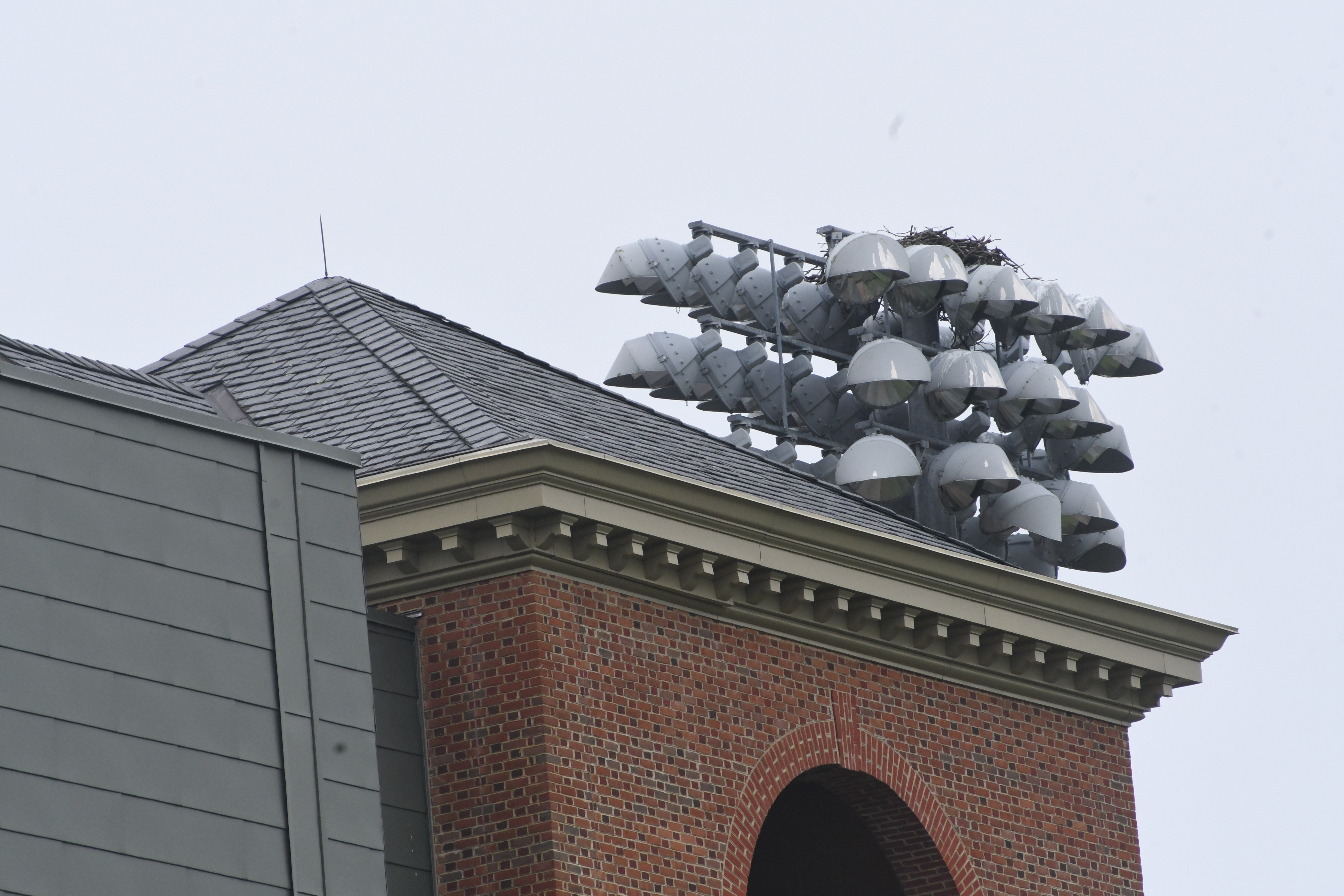
Randy Chambers, director of the Keck Environmental Field Laboratory, while looking out a window at the Sadler Center, happened to catch a glimpse of ospreys carrying branches. Over the next few days, he confirmed that ospreys were indeed attempting to nest on top of a light tower at Zable Stadium. A long-time osprey aficionado, Chambers sprang into Green Fee action.
“We knew this would be an exciting moment for our community and wanted to share the experience across campus and elsewhere,” Chambers said of the proposal he put together with fellow osprey enthusiasts from W&M IT: Jeff Jolly, Jamie Wick, and Ryan Smith. A successful osprey nest would reflect the health of the College Woods and waterways. The team submitted a successful university Green Fee grant proposal to install a camera at the stadium that would broadcast the live feed of the nest on YouTube.
“Unfortunately, the ospreys were not successful that spring. They never even spent the night at the nest,” Chambers recalled.
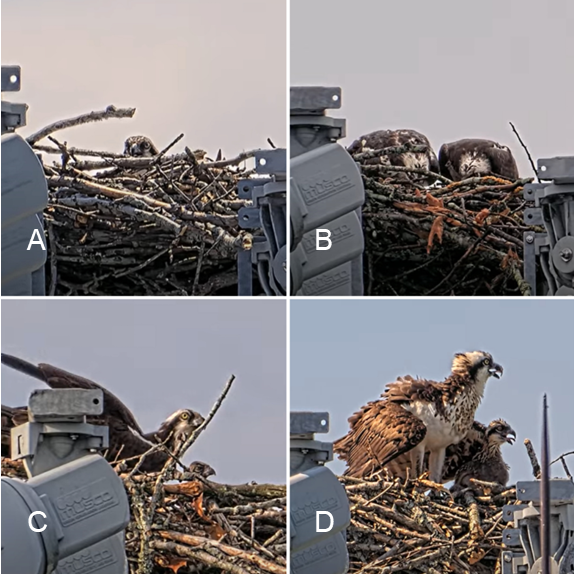 It was a huge disappointment, but a temporary one. In spring 2025, the ospreys returned. They not only spent the night, but they spent weeks hatching and raising a chick that fledged at the end of August. Shortly thereafter, the nest was empty, and the osprey pair and chick were presumably readying for their return migration to South America. William & Mary had its first-ever successful osprey nest on campus!
How big of a deal is this? Watts summarizes, “My feeling is that although campus and (Lake) Matoaka is consistent with what ospreys use today, it is not really consistent with what they used in the early 1900s.” So, it's not unexpected, but still very welcome.
Our osprey pair is following a trend Watts has noted elsewhere: inland nests near low salinity waters are having greater breeding success than nests near coastal waters. Watts documented catastrophic nest failure along the Eastern shore and steep declines among high and moderate salinity areas of the Bay. Osprey chicks appear to be starving to death, which Watts infers is due to overfishing of the menhaden runs that Bay ospreys rely on.
Ospreys eat fish almost exclusively. From Lake Matoaka, the ospreys are likely eating a lot of gizzard shad and catfish. The gizzard shad is a non-migratory, distant cousin of the Atlantic menhaden that is tolerant of turbid water. This slimy, stinky species is of little commercial value to fishermen, but high forage value to wildlife like ospreys and river otters. With a bit of luck and lots of learning from last year’s nesting season, perhaps “our” Zable Stadium osprey pair will be back again this spring.
Chambers and the IT team will be ready: They hope to re-position the camera to get a better view into the nest and to include sound. Follow along at WMOspreyCam on YouTube, with Instagram updates at WMKeckLab.