 Skip to main content

Javanese Gamelan Ensemble returns to W&M
As the lights dimmed at the Music Arts Center Concert Hall, accomplished Indonesian composer Peni Candra Rini took to the stage, sitting in front of the crowd, as the calm, meditative sound of bronze gongs beating in rhythm to Rini’s voice filled the air. It was the debut performance for William & Mary’s newly reinstituted Javanese Gamelan Ensemble.
The intimate, interactive performance showcased the Gamelan style of music to the W&M community. It also marked the beginning of a rebirth of Gamelan music on campus, as well as a growing partnership between the music departments at W&M and the University of Richmond.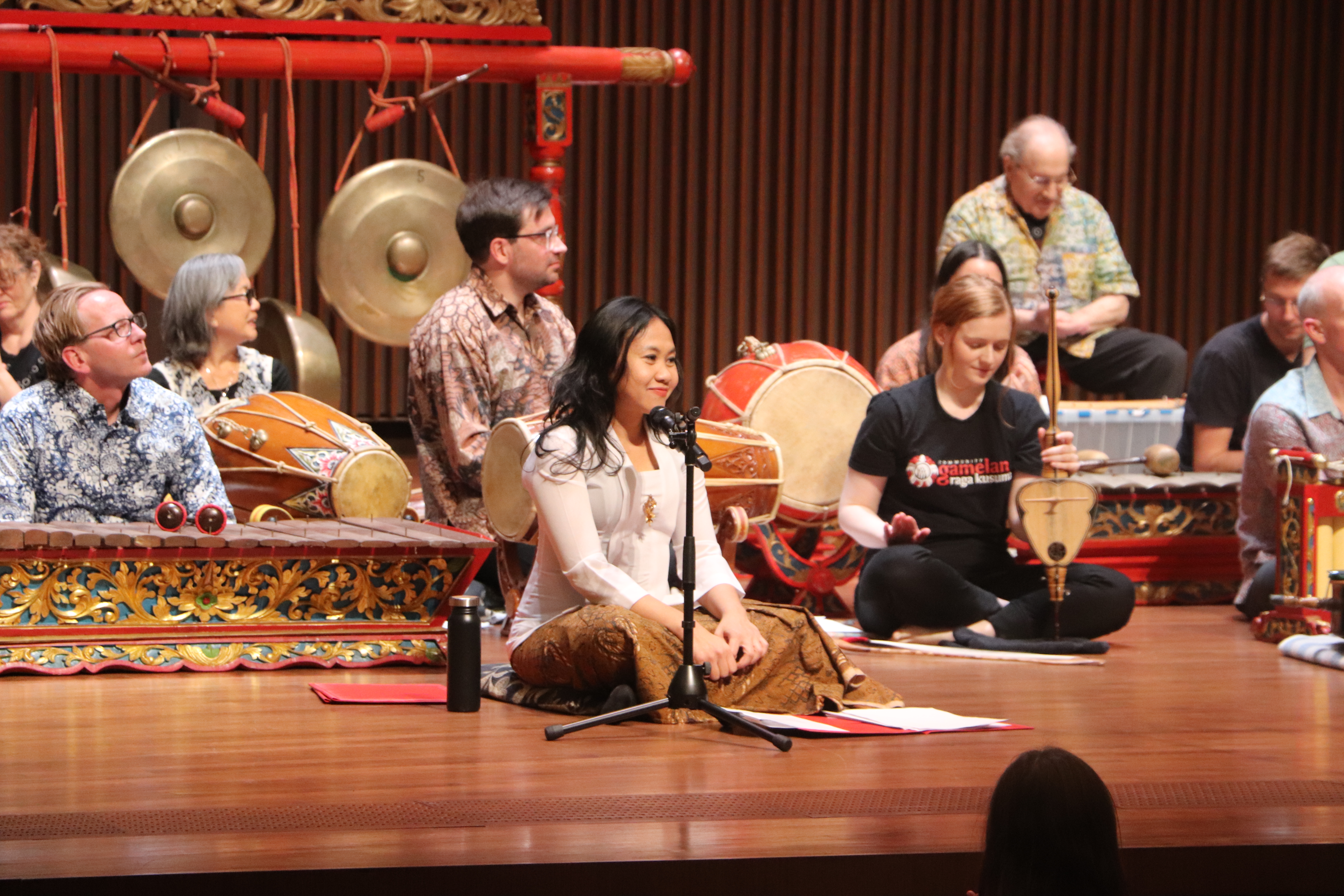
Gamelan is a traditional Indonesian musical ensemble consisting primarily of percussion instruments including bronze gongs, metallophones, kendang drums, xylophones, as well as bamboo flutes and stringed instruments like the rebab and siter. A Gamelan performance typically features a large, ornately painted wooden stand that holds numerous bronze gongs — a centerpiece to this style of music.
The musicians sat on the floor beside their instruments. Rini in the front, led each song with mesmerizing, expressive singing both in Indonesian and Javanese. “We’re lucky to have her here with us…there’s no way we could have done it alone,” said Anne Rasmussen, professor of music and ethnomusicology and Bickers Professor of Middle Eastern Studies.
The formation of the ensemble — consisting of William & Mary students and University of Richmond musicians — and the concert on Nov. 18, was assisted by Rasmussen. As director of the W&M Middle Eastern Music Ensemble, and the senior ethnomusicologist at W&M, she hoped to bring back traditional Javanese music to the arts program.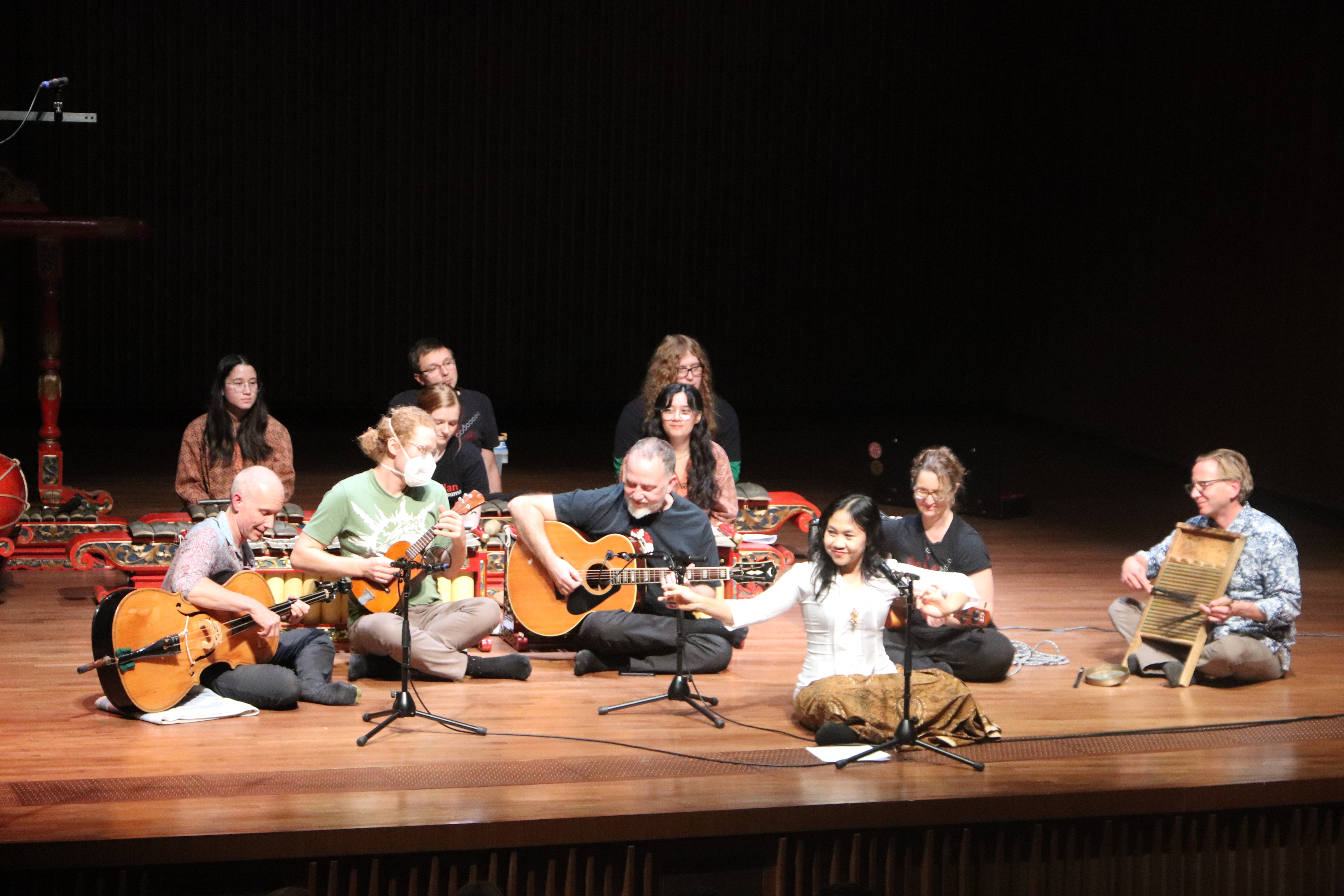
Originally formed in January 1999, W&M’s Gamelan Ensemble did not possess its own gamelan until 2004, when the first William & Mary Freeman Grant provided the funds to purchase a set of instruments made in central Java. However, the ensemble faced difficulties in finding long-term instructors over the years and went into hiatus during the COVID-19 pandemic. As life slowly returned to campus, the group waited for the new arts building to be completed in 2023 before they began their search again.
Rasmussen met Rini through her colleague Andy McGraw, professor and chair of the Music Department at the University of Richmond. Rini, who is on a three-year leave from the Indonesian Institute of the Arts in Java at the University of Richmond, is involved in an extensive collaboration with Prof. McGraw and Richmond area musicians. She has performed around the world and in 2023, she became the first woman commissioned to compose work for the Mangkunegaran court of central Java. The following year, she received the highest honor from Indonesia’s ruler. Rini is also a Fulbright scholar and was named Aga Khan Foundation’s laureate of the arts in 2022.
Andy McGraw, chair of the music department at the University of Richmond, and experienced Gamelan players from his troupe also joined the performance. McGraw approached Rasmussen this past summer in hopes of restarting W&M’s ensemble. With Rini, currently an artist in residence at the University of Richmond, McGraw thought she, along with a little help from his ensemble players, would reignite W&M’s group now under the direction of Caio Davison ‘17, a W&M alum who has returned to his alma mater to conduct the weekly one-credit ensemble class.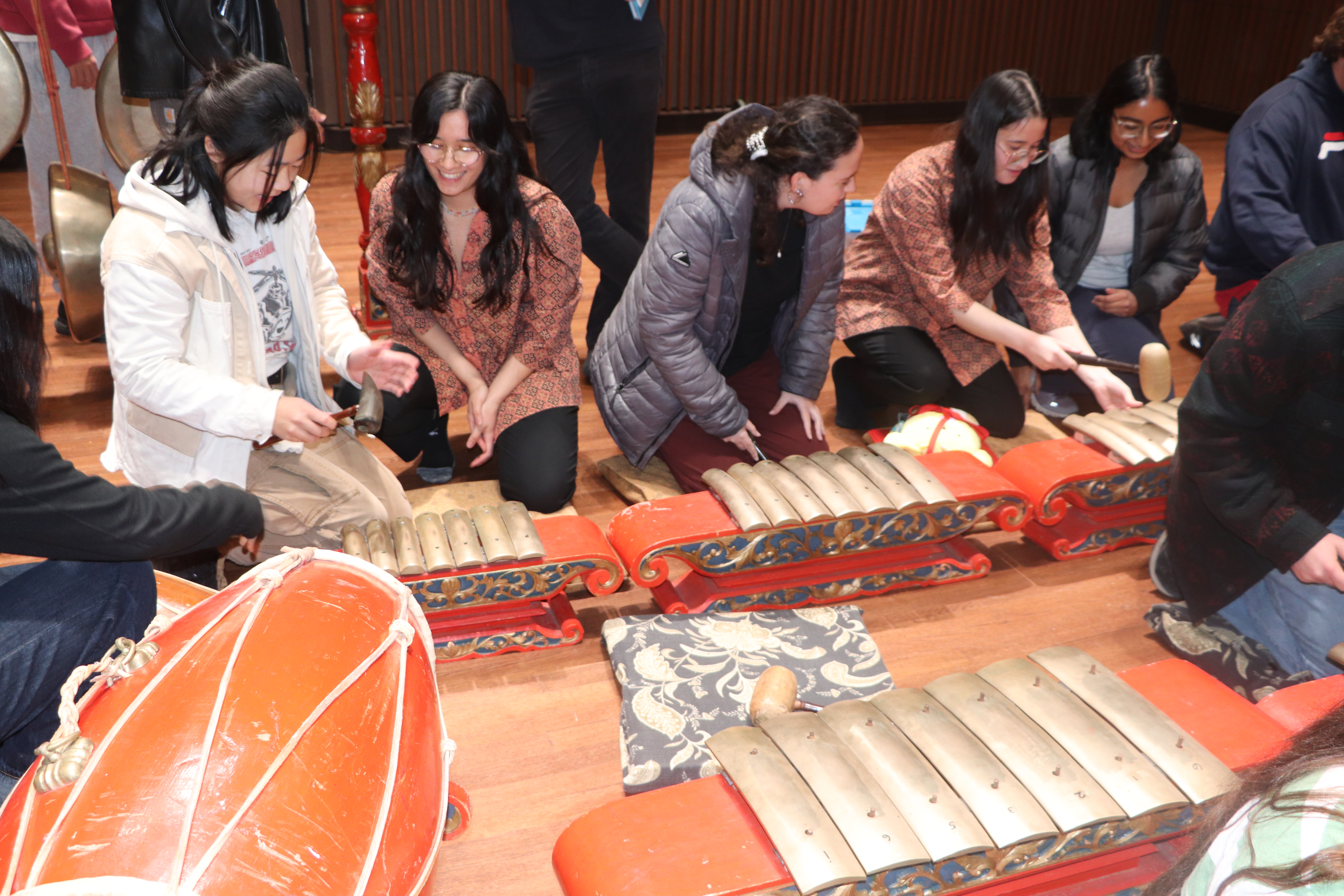
After the performance, the musicians invited audience members on stage to interact with the instruments and musicians. Attendees engaged with the ensemble and reflected on the unique performance. “Coming into this, I didn't really know what Gamelan was, but I learned a lot from the program…with the combination of all the instruments put together, it's not traditional music I hear in the U.S. It’s more mindful, almost,” noted Neel Sawkar ‘28. The musicians encouraged attendees to try out their instruments and answered questions about Gamelan music.
The Gamelan Ensemble will continue to meet weekly this semester and is already rehearsing for their spring concert, which is scheduled for Wednesday, April 22 at 7:30 p.m. in the Muscarelle Museum. Rini’s newest collaborative contemporary work will premiere at the Modlin Center for the Arts in Richmond on Sunday, April 19.