Skip to main content

Sustainability in Chesapeake shorescapes: A comparison of habitat support for grass shrimp in living shoreline and natural marshes
Ansley Levine ‘20
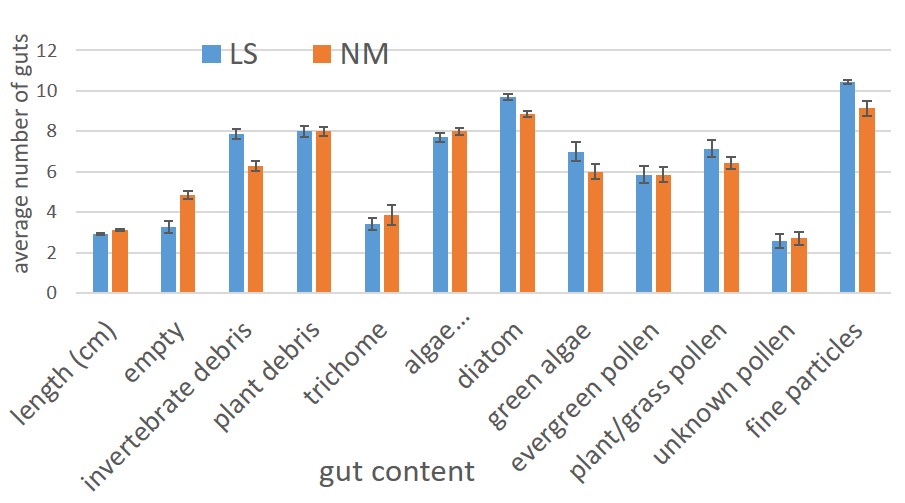
Grass shrimp (Palaemonetes pugio) populations were compared between 9 pairs of living shoreline and natural marsh sites in the southwestern portion of the Chesapeake Bay. Specifically, shrimp population demographics (length and sex ratios) and gut contents were studied over 7-weeks during June and July 2019 to compare between living shoreline and natural marsh shrimp populations. The study assessed whether living shorelines are approaching similar functionality of natural marshes by addressing two main questions: (1) Does average shrimp length or proportion of total gravid females differ in living shorelines versus natural marshes? (2) Do living shorelines provide different nutritional resources for grass shrimp than natural marshes, or do differences in diet vary more by location than marsh type? In general, shrimp populations differed more among site pairs from different locations than between created and natural marshes from the same location. From summer sampling, no major differences were found in population demographics considering average shrimp length and proportion of gravid females from 9 site pairs. Gut content analysis of shrimp from 7 marsh pairs demonstrated that diets did not significantly differ between marsh types. LS sites were found to be emptier on average than NM sites and contained more fine particles. In addition, the shrimp appeared to eat more invertebrate debris in the LS habitats than the NM sites. At most sites, less than half of all guts dissected were empty, suggesting that shrimp were successful in obtaining dietary needs in both site types. Almost every site contained at least one unnaturally colored blue, pink or pale green unidentifiable filament or particle, all of which were assumed to be man-made plastic. The site pair in Norfolk appeared to have more plastic contamination in the guts than the other more northern Chesapeake sites near the York River or Mobjack Bay.