Skip to main content
Comparison of Phosphorus Content in Created and Natural Tidal Salt Marsh Soils
Jun Shi ’19
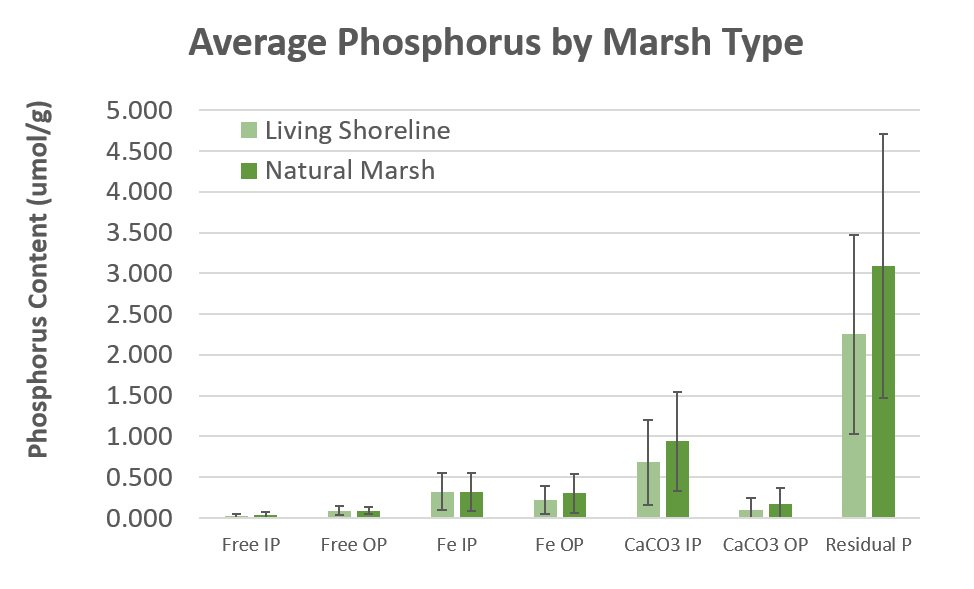
Natural salt marshes have been recognized for their ability to provide some level of coastal protection from wave-induced erosion and rising sea level. Efforts to mimic nature via construction of “Living Shorelines” can both protect the shorelines from erosion and mitigate coastal habitat fragmentation caused by riprap and bulkheads. S. alterniflora and S. patens are two of the most common plants used for Living Shoreline projects in the Chesapeake Bay area. For this research, I compared phosphorus content in soils from Living Shorelines in the Chesapeake area with that from adjacent, natural salt marshes. Because phosphorus is a critical nutrient for plant growth, I wanted to analyze the degree to which the Living Shorelines are approaching the structure and function of natural salt marshes. I found that the Living Shorelines marsh soils do not always have less total P than the natural salt marsh soils. While at some paired sites, the natural salt marshes exhibit more organic P, at other sites, the Living Shorelines marshes exhibit more organic P or similar amounts of organic P. Finally, different plant species from low (Spartina alterniflora) and high (Spartina patens) marshes do not contribute to different levels of phosphorus.