 Skip to main content
A Test of Creativity: TAG at W&M
In May 2025, the Anthropology Department welcomed students, faculty, and industry professionals alike to campus to participate in the annual Theoretical Archaeology Group (TAG) meeting. Initially intending to host the conference in the early years of the COVID-19 pandemic, the Anthropology Graduate Student Collective determined to come together with members of the faculty and staff to organize the recent meeting.
“The amorphous structure of TAG gave us a lot of flexibility, agency, to make cross campus connections. It was a test of creativity in some ways as a group of stressed anthropology students.” -Caroline Watson, PhD Candidate
TAG is an opportunity for graduate students to extend their organizing and planning wings. Working with one’s peers and mentors, TAG facilitates a collaborative environment in which students cultivate a theoretically-inclined place for the presentation and exchange of archaeologists’ work. For our department, it was important that we include our local community as much as possible. In an earnest attempt to bridge the town vs gown divide that plagues many a city, we invited the public to the Hearth Memorial and Plenary Lectures on the first evening.
The graduate students determined that the theme for the 2025 meeting would be “Gather, Listen, Engage” due in part to conversations about the importance of and focus on community-based and -driven archaeology in our own institution. Our grad collective agreed that our responsibility as archaeologists is to our stakeholders and those with and for whom we work.

As a department, we are lucky to study with faculty who demonstrate a community-based and ethical clientage model in archaeology. We were glad to observe and honor one of our own professors among those to offer keynote lectures. To ground our focus as we began the weekend, we invited Dr. Michael Blakey, Dr. Krysta Ryzewski, and Dr. Paulette Steeves each to present during the plenary session. They spoke about their work in New York City, Detroit, and in the Paleolithic period, spanning geographical and temporal boundaries. They demonstrated how to be good stewards to the communities that they serve from the past to the present.
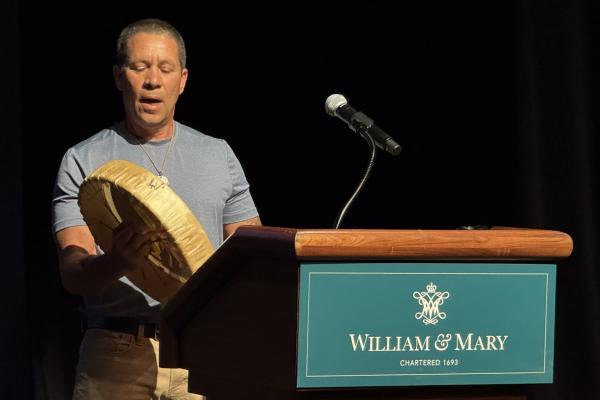
The Anthropology Department received support from the archaeologists at Colonial Williamsburg, the W&M Institute for Historical Biology, the W&M American Indian Research Center, the Lemon Project, and the College of Arts & Sciences among other organizations, institutions, universities, and individuals. Of the conference overall, the chair of the TAG organizing committee, Michelle Lelièvre, noted that she “was delighted to see a year-and-a-half of careful planning with a dedicated team of graduate students and faculty pay off during the conference weekend.” The graduate students, faculty, and staff were integral to the fruition of an enjoyable and successful weekend. In the end, we were grateful for each other and the work we did together.