 Skip to main content
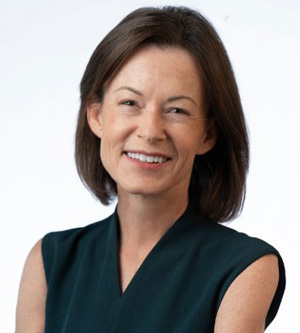
Ardine Williams
Rector
Location:
Williamsburg, Virginia
Email:
[[rector1]]
Bio
For more than three decades, Ardine Williams has pursued what the Romans called a vocatio — a calling. How do people get from where they are to where the economy is going, and what does it take to build the infrastructure that makes that possible at scale? That question has taken her from the Signal Corps to the C-suite, from fulfillment centers in rural Virginia to the White House, and now to the governing board of one of the nation's oldest and most consequential public universities, where Williams serves as Rector of William & Mary's Board of Visitors.
At Amazon, Williams served as Vice President of Workforce Development, leading the company's Career Choice upskilling initiative — redesigning it around a supply-chain logic that identified what local labor markets actually needed, eliminated programs that led to cul-de-sac credentials regardless of completion rates, and built feedback loops between Amazon, community colleges, vocational programs, and local employers so curricula stayed connected to what the market actually valued. The result: 350,000 employees trained for external roles that paid more than Amazon and offered a career path. She also led workforce strategy for Amazon's HQ2 expansion in Arlington, Virginia, committing 25,000 jobs and placing more than 5,000 new hires by early 2022 — building the coalitions, educational partnerships, and civic relationships across the Commonwealth that the expansion required.
Earlier at Amazon, Williams built AWS's global talent acquisition function into the hiring engine for a business that scaled from roughly 4,400 employees, delivering more than 24,000 hires in two years. She identified that highly qualified transitioning military candidates with security clearances were failing technical interviews not for lack of ability, but lack of exposure to current systems, and designed a program to close that gap — one of the first Department of Labor registered apprenticeship programs in the tech sector. The program grew to nine technical specialties, was extended to military spouses, and scaled to over 1,000 graduates. Williams' work at AWS is featured in Andrew McAfee's The Geek Way as an illustration of Amazon's ownership culture — the discipline of pushing decisions to the person closest to the problem and acting without waiting for permission.
Before Amazon, Williams led HR enterprise services for Intel's 105,000 employees across 70+ countries, managing $1.6 billion in contracts and an annual budget of ~$120M. She transformed a fragmented regional model into a global shared services organization and received the Intel Achievement Award, the company's highest team honor. As executive sponsor for American Veterans at Intel, she built a program recognized with four national awards in 2014, and represented the company at the White House as an active member of the First Lady's Joining Forces Initiative and the President's Jobs Council.
That same thread — connecting capable people to economic opportunity through systems built with rigor and genuine curiosity about what communities actually need — now runs through Williams' board and advisory work. She serves as a Trustee of the Strada Education Foundation, where she chairs the Compensation committee — responsible for the executive compensation framework that attracts, aligns, and retains the leaders working across research, policy, grantmaking, and tools like the State Opportunity Index and CredLens to close the gap between what education produces and what the labor market actually needs. She also serves as an Advisory Council member on the George W. Bush Institute's education and workforce working group, and maintains a select advisory practice through Commonwealth Bridge LLC.
Williams holds a B.A. in Political Science from Pacific Lutheran University and completed the Executive Program at Stanford Graduate School of Business. She served as a commissioned officer in the U.S. Army Signal Corps, and lives in Williamsburg, Virginia.
Appointed July 1, 2021 by Governor Ralph Northam
Reappointed July 1, 2025 by Governor Glenn Youngkin
2026-2027 Committee Assignments
Executive Committee (Chair)