 Skip to main content

Promises and Pathways: From Campus to Conference
As part of GRI's new monthly Student Research Spotlight, Mona Garimella '27 and Tajalla Moslih '27 reflect on their recent trip to present research at the Southern Political Science Association annual conference in New Orleans, Louisiana.
Last May, when Mona Garimella '27 saw a posting on TribeCareers for a research position on migration and policy, she clicked on it immediately. The project, Promises and Pathways, sought to examine how different visa pathways shape Afghan migrants’ integration experiences after arrival to the U.S. after the 2021 evacuations from Afghanistan. Opportunities for undergraduates to engage deeply in migration research are rare, and as the child of immigrants, the topic felt deeply personal.
Mona applied during the final week of classes and, a few weeks later, received an email from Dr. Nara Sritharan inviting her to interview.
Tajalla Moslih '27 joined the project in September. As a commuter student, Tajalla initially worried that research might be difficult to balance alongside travel, coursework, and other commitments. Academic research often feels inaccessible to students managing responsibilities beyond campus.
A unique and transformative opportunity
But Promises and Pathways was a unique opportunity which proved to be transformative.
From those initial conversations about the research, it was clear that this was more than just a research assistantship. It is the perfect culmination of theory, research, and real tangible impacts on the community around us. It asked questions that matter not only academically, but in the everyday lives of families navigating new beginnings in the United States. There is a sizable Afghan population in Virginia itself, and this research directly examines Afghans who have arrived all across the US and their experiences resettling thereafter.
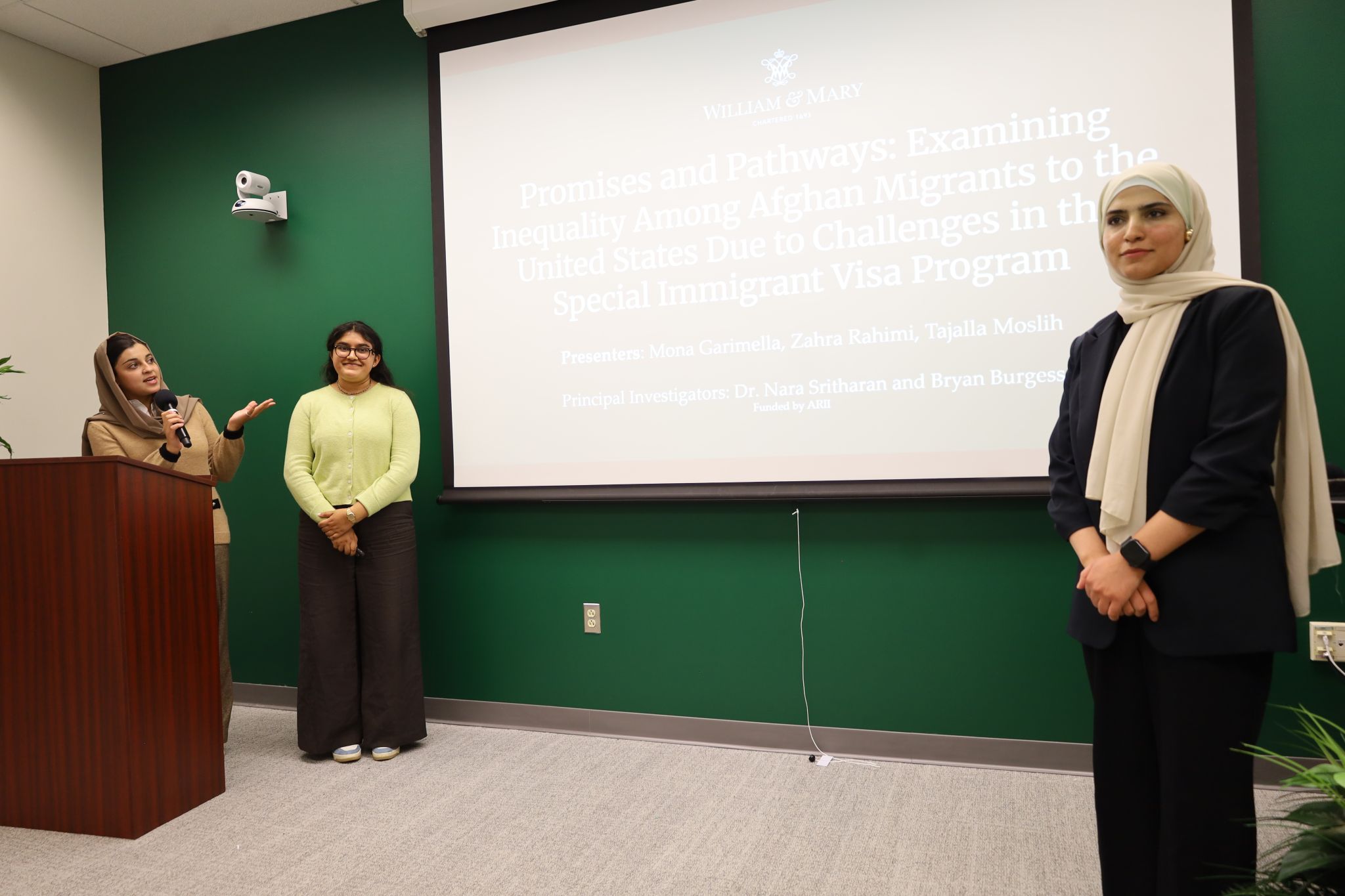
The 2021 U.S. withdrawal from Afghanistan triggered a large-scale evacuation framed as a humanitarian commitment to protect Afghan allies. Yet evacuees entered the United States through multiple legal pathways — including Special Immigrant Visas (SIVs), humanitarian parole, asylum, and family reunification — each carrying distinct rights, timelines, and levels of legal security. Using semi-structured interviews with resettled migrants, our research examines how these legal pathways shape employment stability, housing, healthcare, belonging and more.
Our team consists of Dr. Sritharan, Bryan Burgess '18, a senior policy specialist at AidData, co-research assistant Zahra Rahimi '28, and the two of us. To date, the most meaningful aspect of our research is conducting interviews with migrants directly. It takes immense courage for these individuals to speak to a research team about their migration stories, especially when those stories involve displacement, loss, and ongoing uncertainty. We do not take that candor lightly.
There is something sacred about speaking directly with those most affected by broad federal policies yet who often lack a platform to advocate for themselves. Listening to participants describe navigating paperwork delays, employment barriers, or family separation has underscored how policy decisions reverberate at the most intimate levels of daily life. These conversations have inspired us to write opinion pieces published in The Diplomat outlining direct impacts of changes in policy towards Afghan people.
For Tajalla, who had already been mentoring and volunteering with Afghans who arrived after the 2021 evacuation, the project offered a shift from witnessing challenges to systematically analyzing them. For Mona, the research reaffirmed an interest in pursuing migration policy following graduation.
From Williamsburg to NOLA
Thanks to the Global Research Institute, AidData, and the Applied Research and Innovation Initiative grant, we continuously have opportunities to explore our research further and present it to other bodies. Throughout the academic year, we presented our work at several Global Research Institute (GRI) events, receiving valuable feedback on our methodology and framing. Those opportunities strengthened our confidence as researchers and helped refine our analysis. Then, we received exciting news: Our paper was accepted for presentation at the 2025 Southern Political Science Association (SPSA) conference in New Orleans.
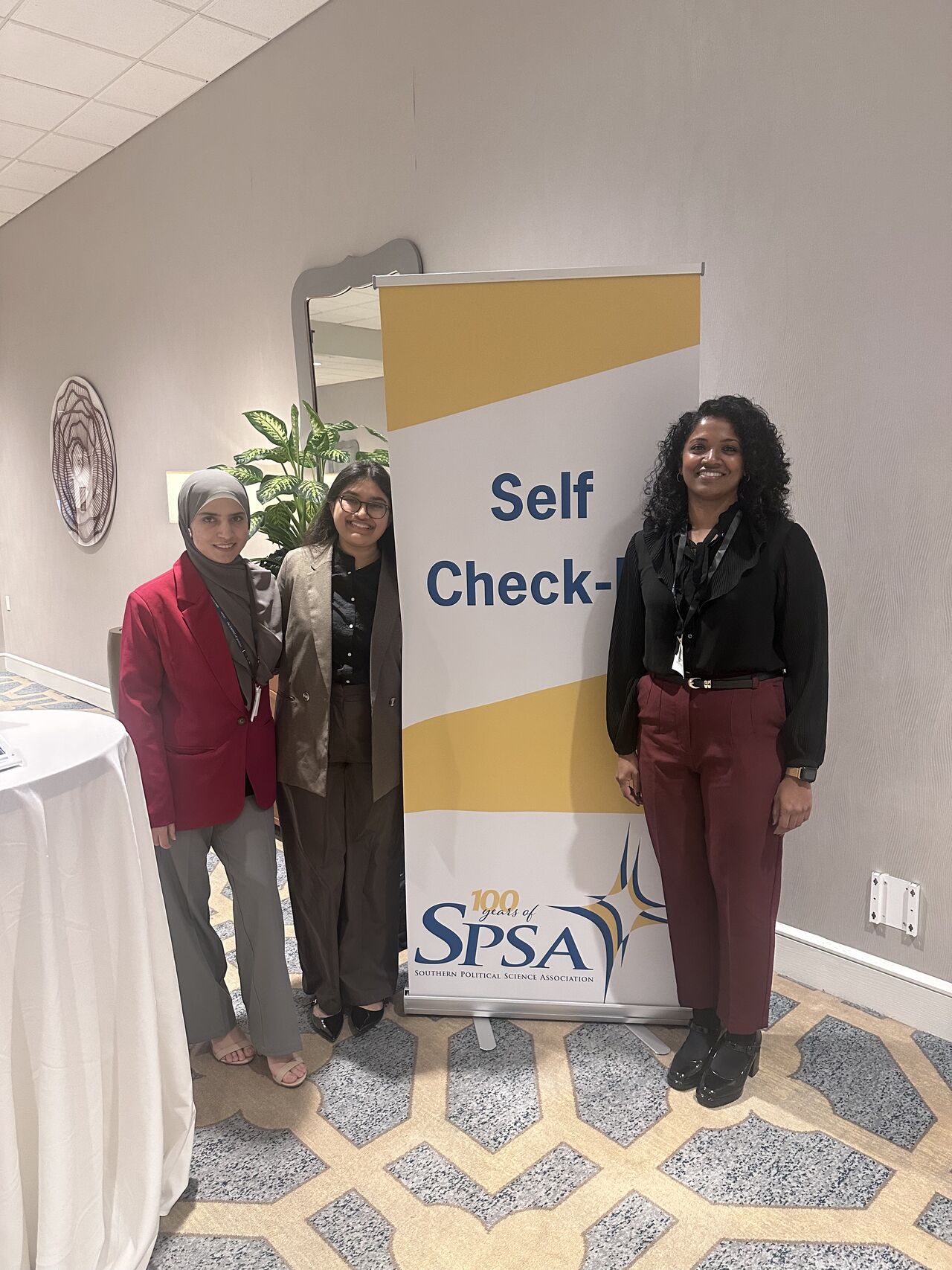
Traveling to SPSA with the help of a GRI Professional Development Award was a milestone for both of us. It was our first academic conference and first time traveling professionally with a research team. Walking into rooms filled with scholars who have spent decades studying migration, law, and other pressing political science issues was so inspiring, even if initially intimidating. We attended panels on immigration policy and human rights, seeing how our work fits within broader national conversations. Between sessions, we got to chat with researchers from across the country, discussing the research process and challenges of studying rapidly evolving policy landscapes.
The experience also revealed to us something crucial about the research process itself: just how collaborative scholarship can be. The feedback we received following our presentation, such as questions about causal mechanisms, suggestions for expanding our comparative framework, and encouragement to think about long-term outcomes, pushed us to refine some of our approaches.
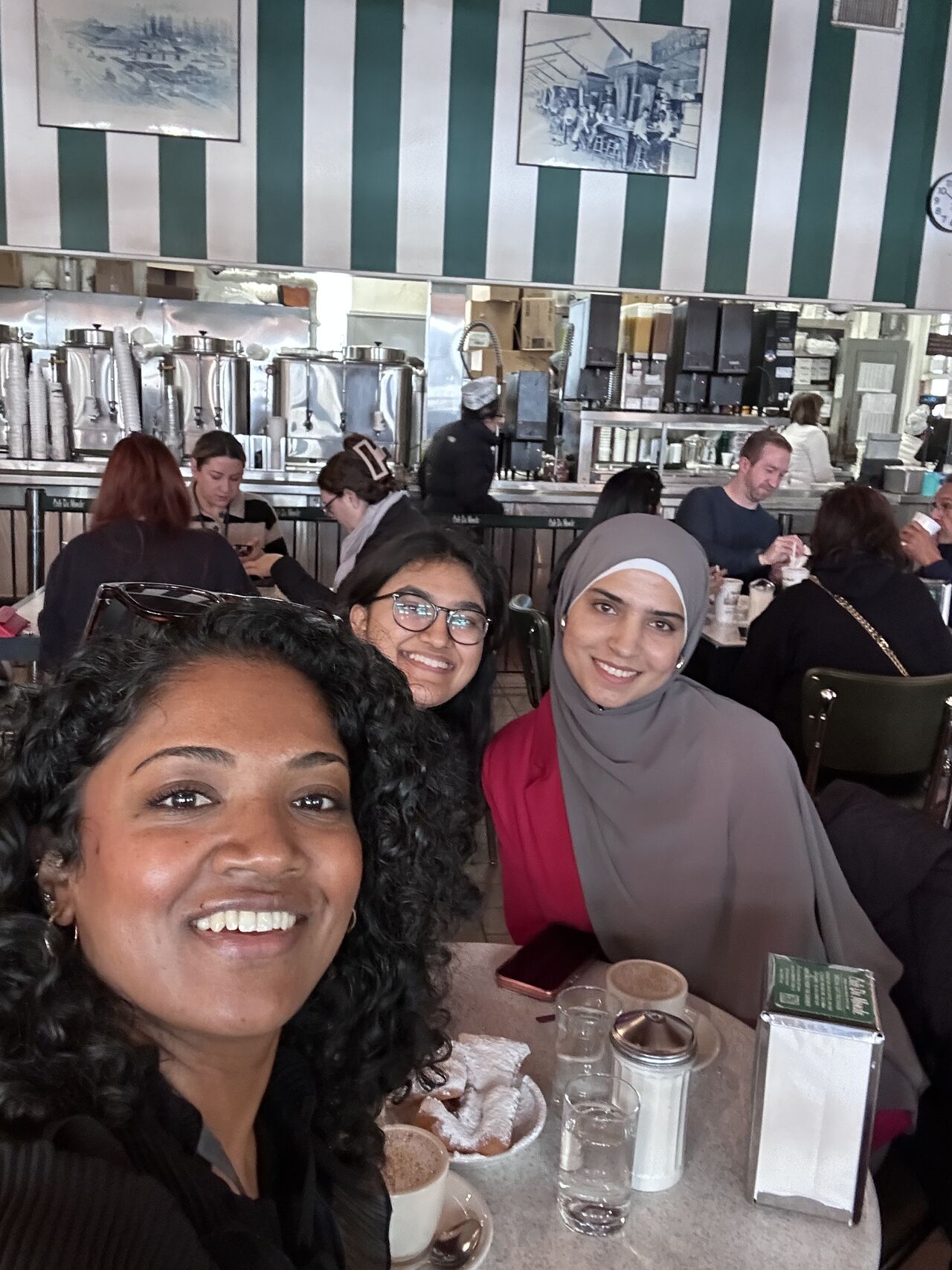
And, of course, there were lighter moments, too: sharing beignets and chicory coffee at Café du Monde, exploring New Orleans between panels, and reflecting on how far we had come from that initial orientation in the summer.
"A bridge between policy and people"
As we settle back in from the conference and recently presenting at the GRI’s Charter Day Student Innovation Showcase, we are excited to continue researching and exploring new ways to examine our data.
We are deeply grateful to the Global Research Institute, AidData, and the ARII grant for funding and supporting this work. Most importantly, we thank Dr. Nara Sritharan and Bryan Burgess for their mentorship, guidance, and constant encouragement. Their support has not only strengthened our research skills but has also shown us what thoughtful, community-engaged scholarship looks like in practice.
Promises and Pathways began as an opportunity to study migration policy. As something so personal to the both of us, it has become a lesson in collaboration and the responsibility that comes with telling others’ stories through academic work. For both of us, this project has shaped how we think about research as not simply an abstract academic exercise, but as a bridge between policy and people.