 Skip to main content

GRI Hosts Panel Discussion on Iran War
On February 28, 2026, the United States and Israel launched a military offensive in Iran. In light of these dramatic developments, the Global Research Institute rapidly convened a panel of leading William & Mary faculty who study the Middle East and nuclear issues to provide the W&M community with insight into the conflict.
Panelists examined the U.S. rationale for the war, questioned the prospects of regime change in Iran, and discussed how governments and citizens across the region are responding. Throughout, they emphasized both the complexity and wide-ranging potential consequences of the war on Iran.
Three W&M faculty were particularly well-positioned to offer insight into the burgeoning war. Prof. Peyman Jafari studies the intersection of oil and labor in the Middle East; Prof. Ameni Mehrez researches political behavior and religion; and Prof. Jeff Kaplow examines the causes and consequences of nuclear proliferation.
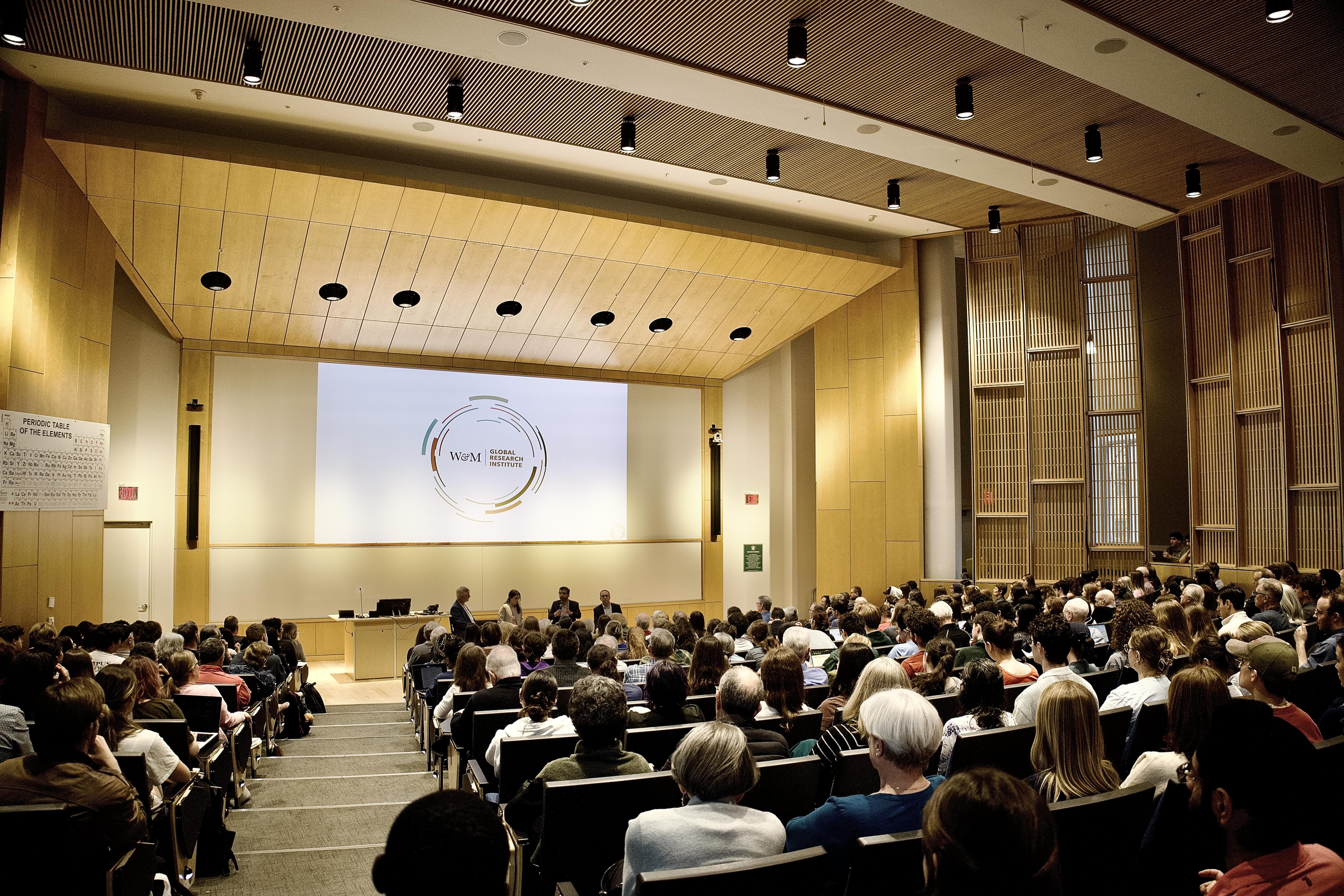
Less than a week into the conflict, examined the emerging military strategy, the historical context, and the implications in the region.
Addressing the conflict from a military perspective, Kaplow outlined the strategic objectives of both Israel and the United States, as well as the rationale behind the U.S. involvement.
After Israel’s 2025 strikes on Iran, he explained, the United States saw a “window of opportunity” to destroy Iran’s missile capabilities, navy, and nuclear ambitions, while also preventing the country from arming militant groups.
But there’s more to fighting a war than simply opportunity. Kaplow raised concerns about the possibility that Iran could sustain the conflict long enough to strain U.S. munitions supplies and challenged President Trump’s statement that the U.S. has unlimited capabilities. Due to limited stock and supplies, production cannot be intensified at the same pace as munitions are used. “Munitions stocks and supplies were a big issue before this war, and this war is making it worse,” said Kaplow.
More than just the number of missiles, Kaplow pointed out that fiscal concerns arise when the U.S. uses $2 million in equipment to intercept a $200,000 Iranian missile.
But how does this U.S. assault map onto interventions of the past? Jafari looked back on Iranian history, arguing that past foreign interventions have consistently failed to foster democracy in Iran. He suggested the roots of the current conflict stem from the 2001 U.S. invasion of Afghanistan, the 2003 invasion of Iraq, and President Trump’s decision to withdraw from the Iran nuclear deal and recompose sanctions. Although many regime change interventions are successful in removing dictators, Jafari noted they often “increase the risk of civil war, insurgency, and violent political instability.”
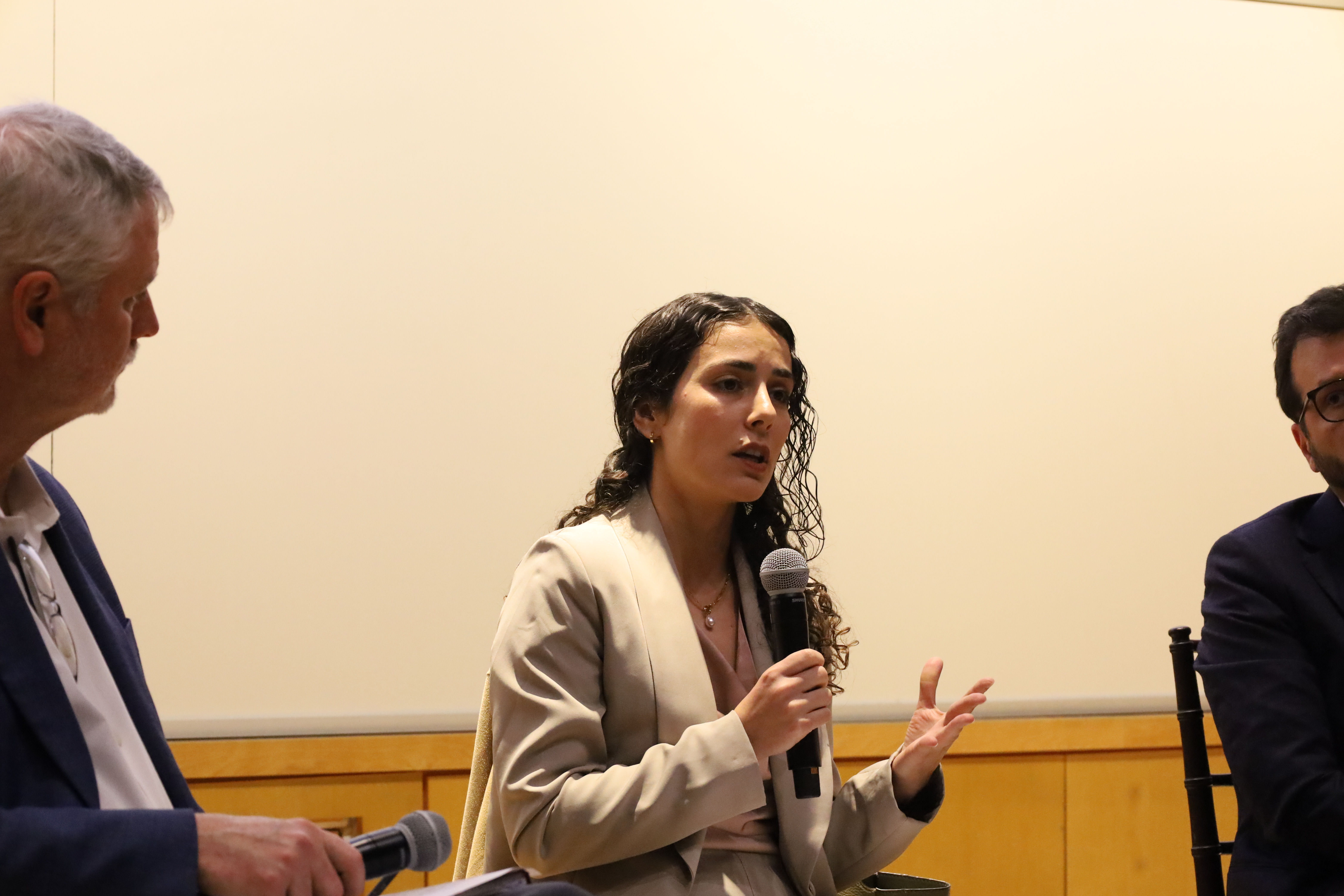
That instability can spill over into the wider region. Mehrez, who is a survey expert, cited a poll showing that “75% of Iraqis are fearful and uncertain about the war in the region.”
Across the Iranian diaspora, too, there are deep divisions, she noted: “Some have celebrated the assassination of officials, while others have mourned them.”
Audience members pressed the panelists with tough questions. One student asked whether Washington’s rationale for the conflict aimed to undercut China’s oil capabilities—and if it might push Beijing closer to Russian energy alliances. Another questioned how the shortage of State Department officials and poor planning could affect the course of the conflict.
Madeline Riggs ’26 expressed her appreciation for the Global Research Institute for hosting the event. “I’m so grateful for the opportunity to learn from experts at such a pivotal moment in U.S. foreign policy,” she said.