 Skip to main content
Building Trust Through Diplomacy: Ultimately a Human Activity
This January, students in Professor Marcus Holmes’s seminar, Building Trust Through Diplomacy, took their classroom well beyond William & Mary’s Washington Center, engaging directly with the people and institutions that shape contemporary international affairs. With programming in both Washington, D.C. and New York City, the course emphasized experiential learning and face-to-face engagement as central components of diplomatic practice.
A highlight of the seminar was a day trip to New York City, made possible through the support of the Reves Center for International Studies, the Charles Center, and the William & Mary Washington Center. In New York, students visited the United Nations Headquarters and the Danish Mission to the United Nations, where they examined how multilateral diplomacy works in practice and how smaller and middle powers operate within the UN system.
“Diplomacy is ultimately a human activity,” said Holmes. “You can read about it in books, but there is no substitute for seeing how it actually works and for talking directly with the people who do this work every day. These trips are designed to help students understand diplomacy as something lived and practiced, not just theorized.”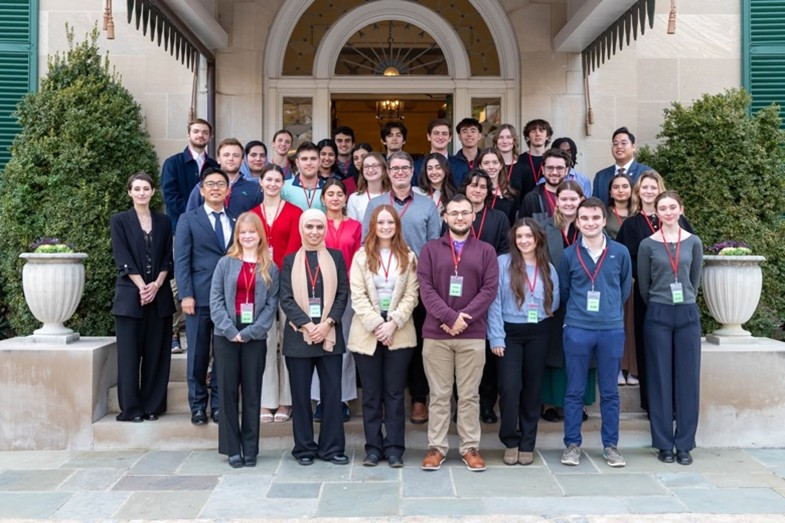 The class at their visit to the Japanese Embassy
In Washington, D.C., the class engaged with a wide range of diplomatic and policy institutions. Students visited the Carnegie Endowment for International Peace and the Council on Foreign Relations, gaining insight into how research organizations and policy communities shape debates on international security and global governance. Embassy visits included meetings at the Japanese Embassy, the Embassy of Estonia, and the German Embassy, where students learned how diplomats represent national interests, manage alliances, and navigate contemporary geopolitical challenges.
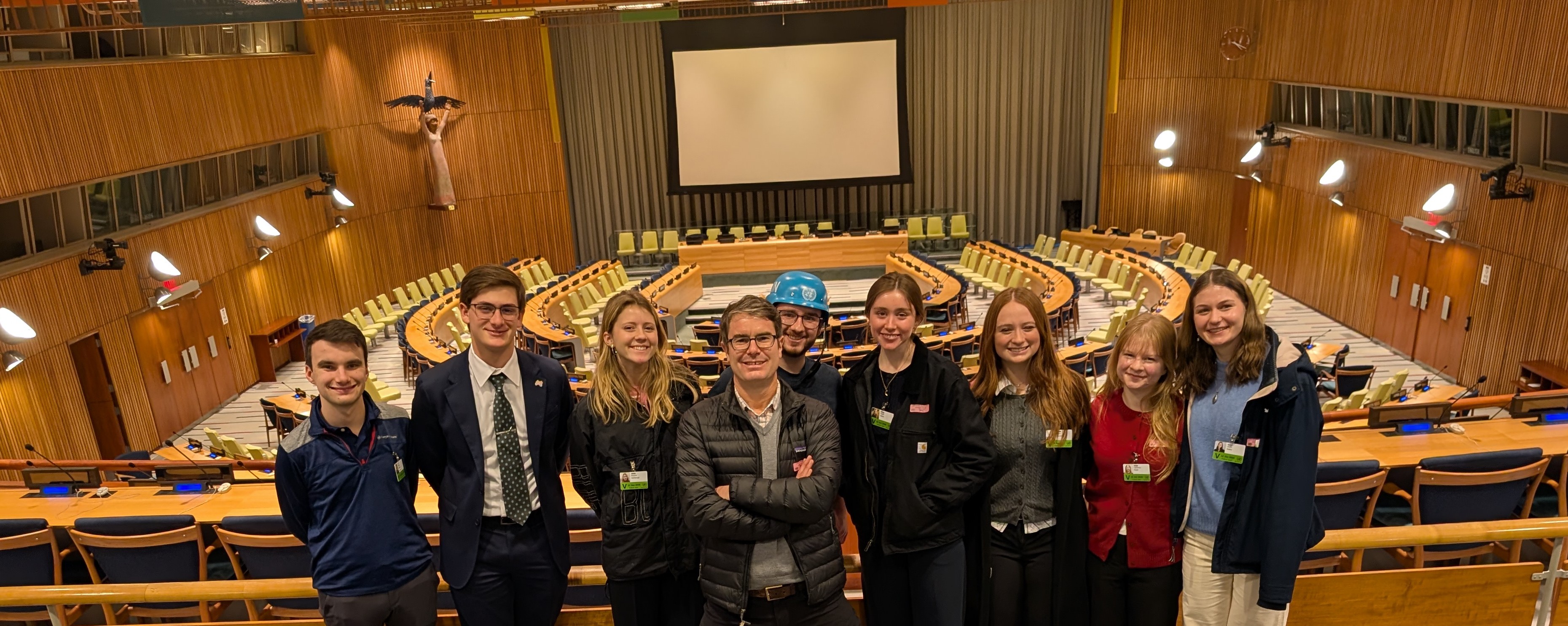
A view of the UN Economic and Social Council Room
The seminar also included a hands-on diplomacy simulation at the U.S. State Department, conducted in partnership with the National Museum of American Diplomacy. Guided by Ciara Koepke, students assumed the roles of states and international organizations tasked with resolving a nuclear proliferation crisis, giving them firsthand experience with the pressures, uncertainty, and tradeoffs inherent in high-stakes diplomatic negotiations.
"I took this course as a student in the D.C. program last winter,” said Sarah Schulte, the course’s TA, “and I was absolutely fascinated about how different people in the diplomatic world conceptualized their work. What was exciting about being the Teaching Assistant for the 2026 Building Trust Through Diplomacy course was being able to witness how diplomacy has evolved within the last year. Just as the global order has completely flipped, so has diplomacy. Being able to reattend our site visits gave me so much insight into how diplomats adapt to a changing international system, teaching me lessons I will take with me long after I graduate William & Mary."
Together, these experiences underscored the distinctive value of the Washington Center and its ability to connect William & Mary students with the institutions and practitioners at the heart of global politics. By combining coursework with site visits in both Washington and New York, the seminar demonstrated how diplomacy is learned not only through texts and theories, but also through direct exposure to the people and places where international decisions are made.
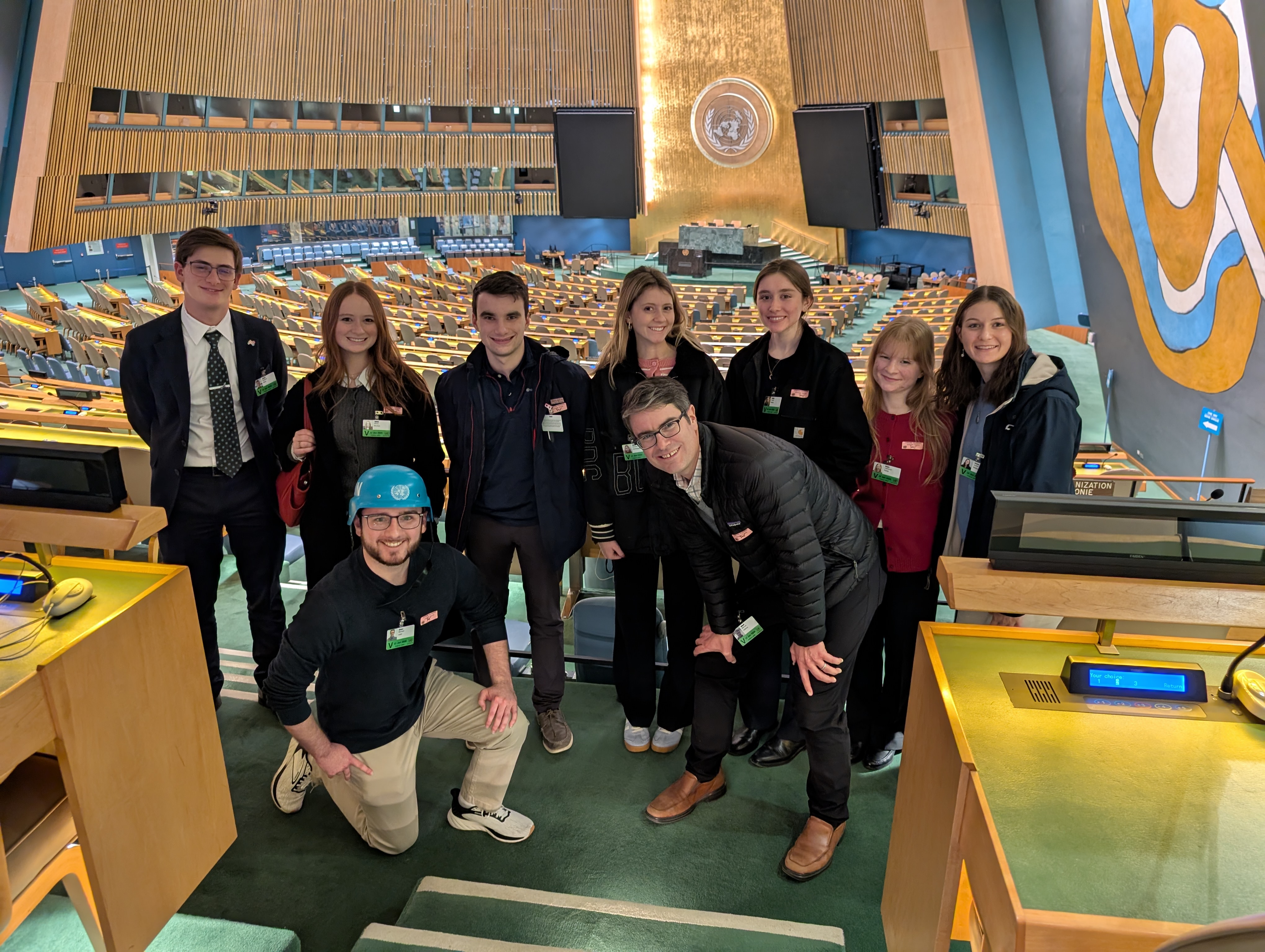
Professor Holmes and students at the United Nations General Assembly