 Skip to main content

Journalist Nina Dietz urges students to investigate 'the long now'
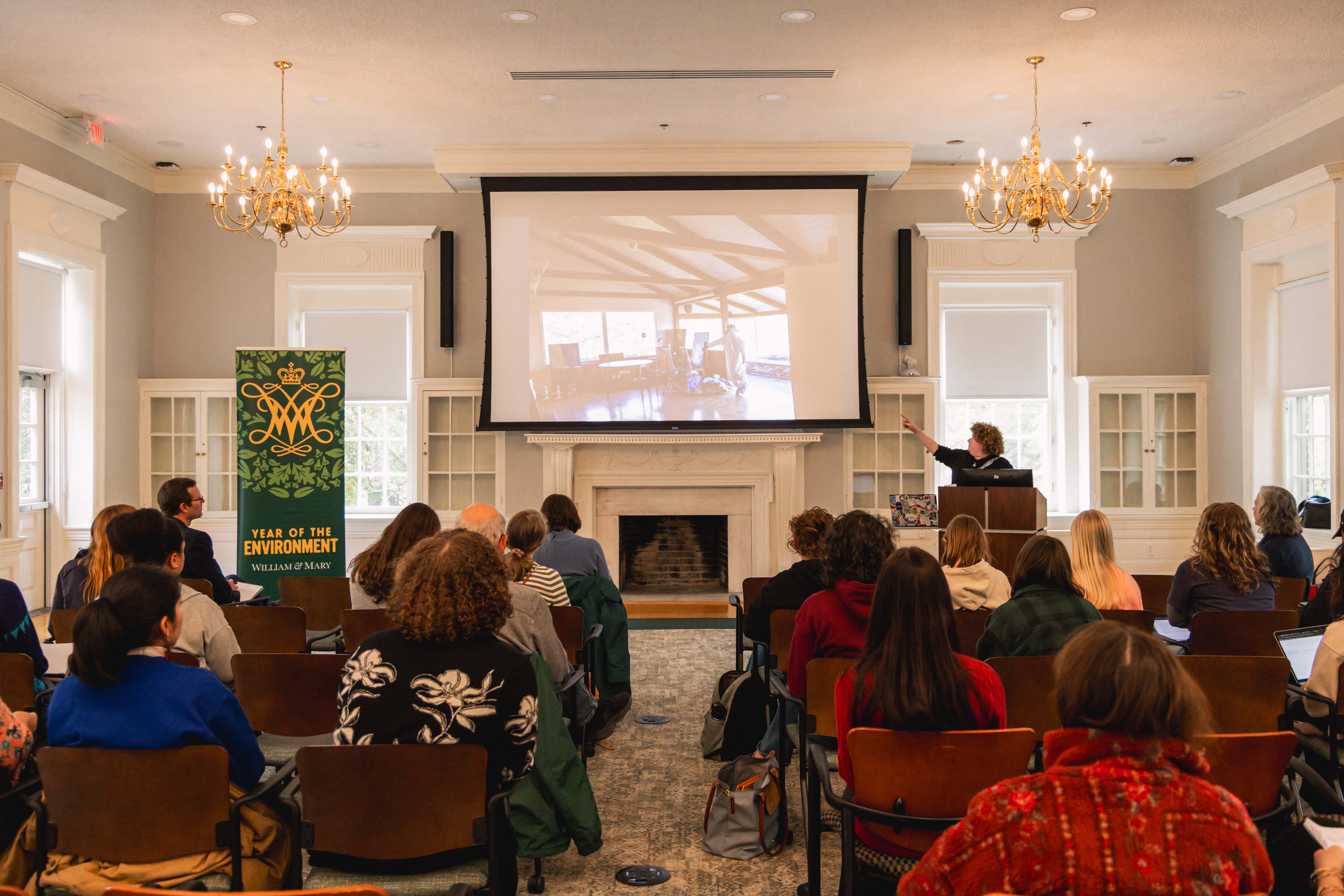 Just two years into her career as a freelance investigative journalist and photographer, Pulitzer Center grantee Nina Dietz is redefining how stories at the intersection of human and environmental health are reported and written.
During a two-day residency at William & Mary Oct. 26-27, Dietz joined the Sharp Journalism Seminar as a co-instructor, led a lunchtime discussion with 1693 Scholars, and facilitated a public conversation with nearly 50 members of the campus community about the need to consider major events through the lens of their legacies.
“An event, especially a disaster, is often looked at as a singular moment—a blip on the timeline—when it actually marks the beginning of a thread that continues into people’s lives for months, years, even decades,” Dietz explained.
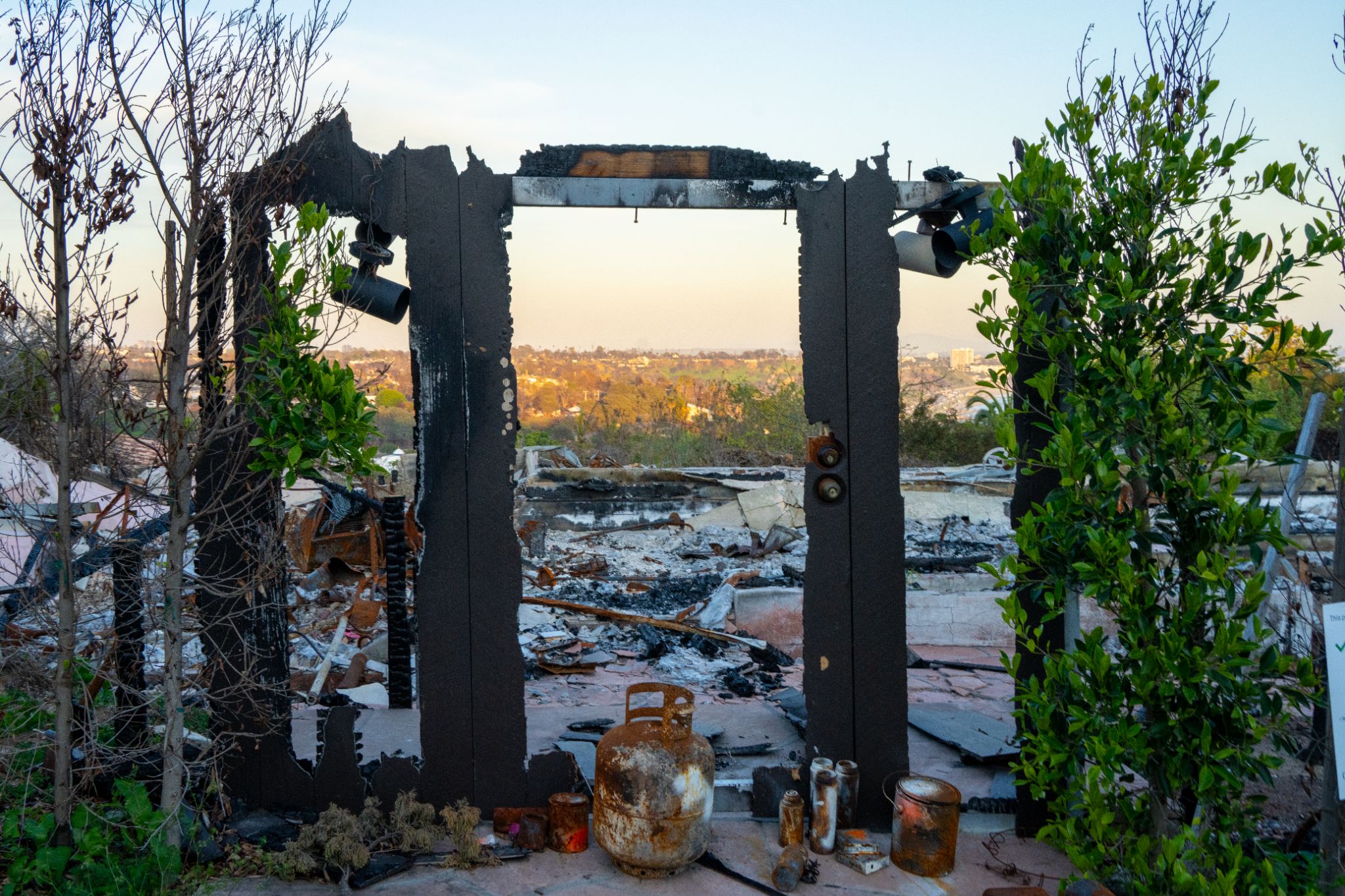
She pointed to the lasting effects of Cold War nuclear test site contamination in California, pollution of ground water by Hurricane Helene in North Carolina, and soil toxicity stemming from recent fires in Los Angeles as examples of events that appear to be over but are not: their deleterious effects continue to shape people’s lives profoundly.
Relationships and reporting
Only by spending time in communities is the full impact of an event understood, she said.
“Journalism is relationships, and when you realize that you’re forming relationships with sources, you’re able to do a better job as a storyteller contextualizing ‘the long now,’ in three dimensions, not just a particular moment that starts and ends and has resolution,” Dietz explained.
“A lot of my articles don’t have clear resolution because my sources’ situations are not resolved,” she said.
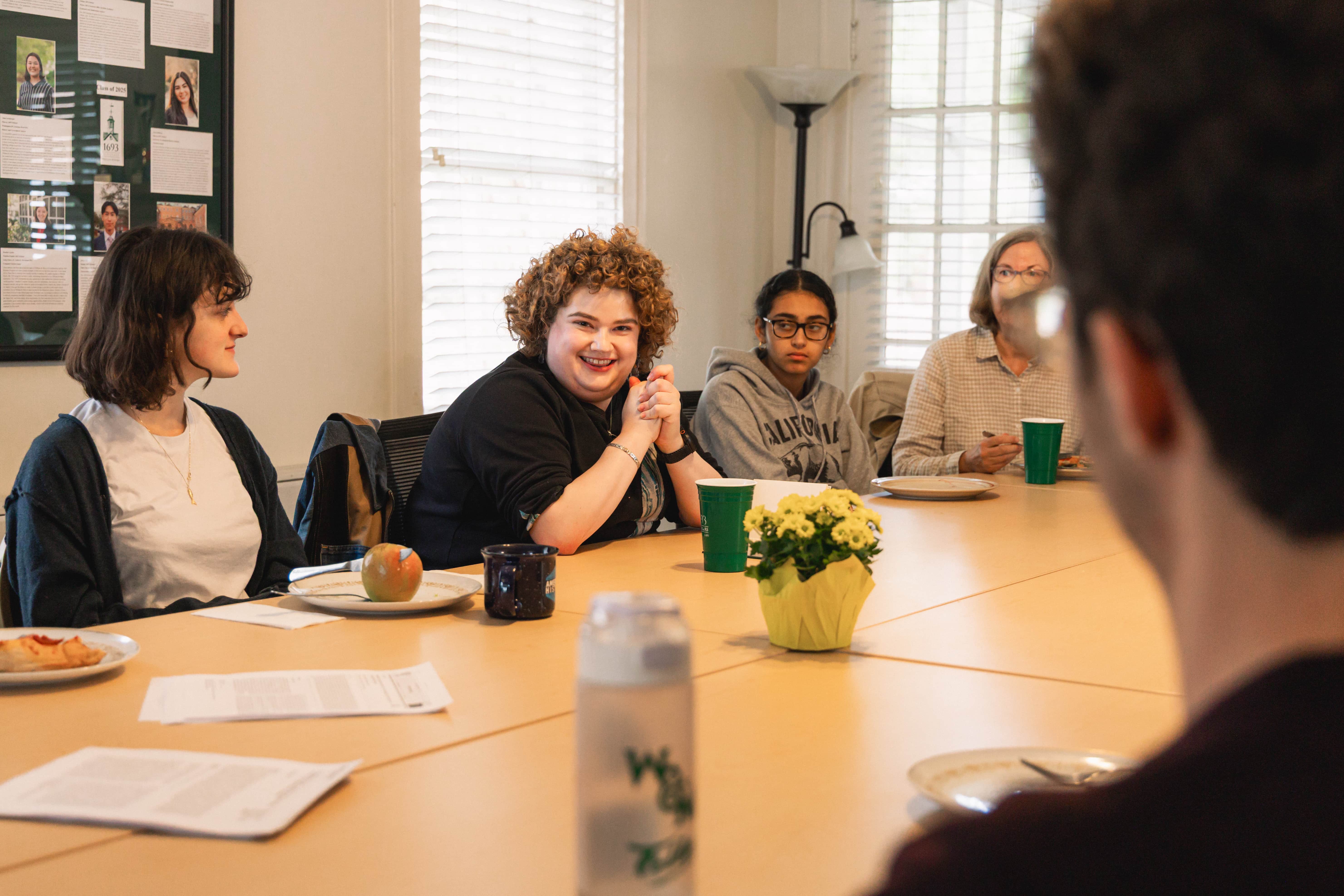 A people-centered approach to reporting provides the framework for stories that take a longer, deeper view than is typically the case.
“I often speak to people about the worst day of their lives,” she said. “If you truly care about what people are saying, and care about them, then you form a relationship that’s based on respect.”
As an investigative journalist, Dietz starts with a question worth chasing. “What is overlooked? If you’re being told something that’s not true, what else is being said that’s not true? You have to keep following up and pushing back,” she said.
But finding an idea—and chasing it—is not enough. Storytellers need narratives to carry it through. “The narrative thrust grows out of the hours and hours you’re spending with people, as they open their lives to you,” Dietz said.
Dietz’s stories reveal the hope and resilience of everyday people who face the horror of ineffable loss, toxic contamination, and life-altering transformation from events and long-term health issues.
Her investigations also make visible the hidden big business of disaster clean-up. “There are people benefiting financially by making this planet unlivable for future generations. This fact drives a lot of my work and keeps me going when the work feels overwhelming.”
Learning for a living
Dietz, who majored in photography and imaging while an undergraduate at NYU Tisch School of the Arts, once aspired to a career in documentary photography. Graduating during the pandemic changed her direction.
“In 2020 we had more hurricanes recorded than ever before, but they just weren’t being covered. Covid crowded out everything. But just because you have an immediate problem, it doesn’t mean your other problems are going to vanish.”
This realization led Dietz to rethink her purpose in life. “I needed to figure out how to do something useful,” she explained.
 She chose to attend Columbia Journalism School, where she became a Stabile Fellow, earned a Master’s degree, and honed her investigative and multimedia reporting skills.
“As a journalist, I get to be a nerd for a living,” Dietz said. “I get to learn—and get to help other people learn—for a living. You don’t go into this field unless you care about knowledge and understanding the truth.”
She also continues to tell stories through photography—a craft that informs and complements her work as a reporter and writer.
“I try to capture moments of beauty and joy in my photography, as well as moments of pain,” Dietz explained. “A beautiful photograph of something that is devastating will hold people’s attention and captures a person’s reality beyond the terrible moments.”
Her photos also serve as visual notes during the writing process and inform descriptions of people, places, and situations in her stories.
“Don’t shy away from beauty,” she advised students. “If you can show moments of beauty and compassion, even if there’s a burned home there, you get people to engage in a way you can’t if you just show the devastation and tragedy.”
Her photography provides readers with additional perspectives on the lives of those she quotes and features in her writing. “These aren’t just characters in stories but real people. They’re giving you a window into their real life, and as a photographer, you have to respect them.”
Looking for long shadows
Dietz emphasized the importance of research and pre-reporting in her work. Prepping for a single interview can take hours.
“What I do takes a long, long time,” she said. “If you’re interviewing an expert on soil toxicity or fine particle pollution, you need to understand enough about these things so you can ask the right questions.”
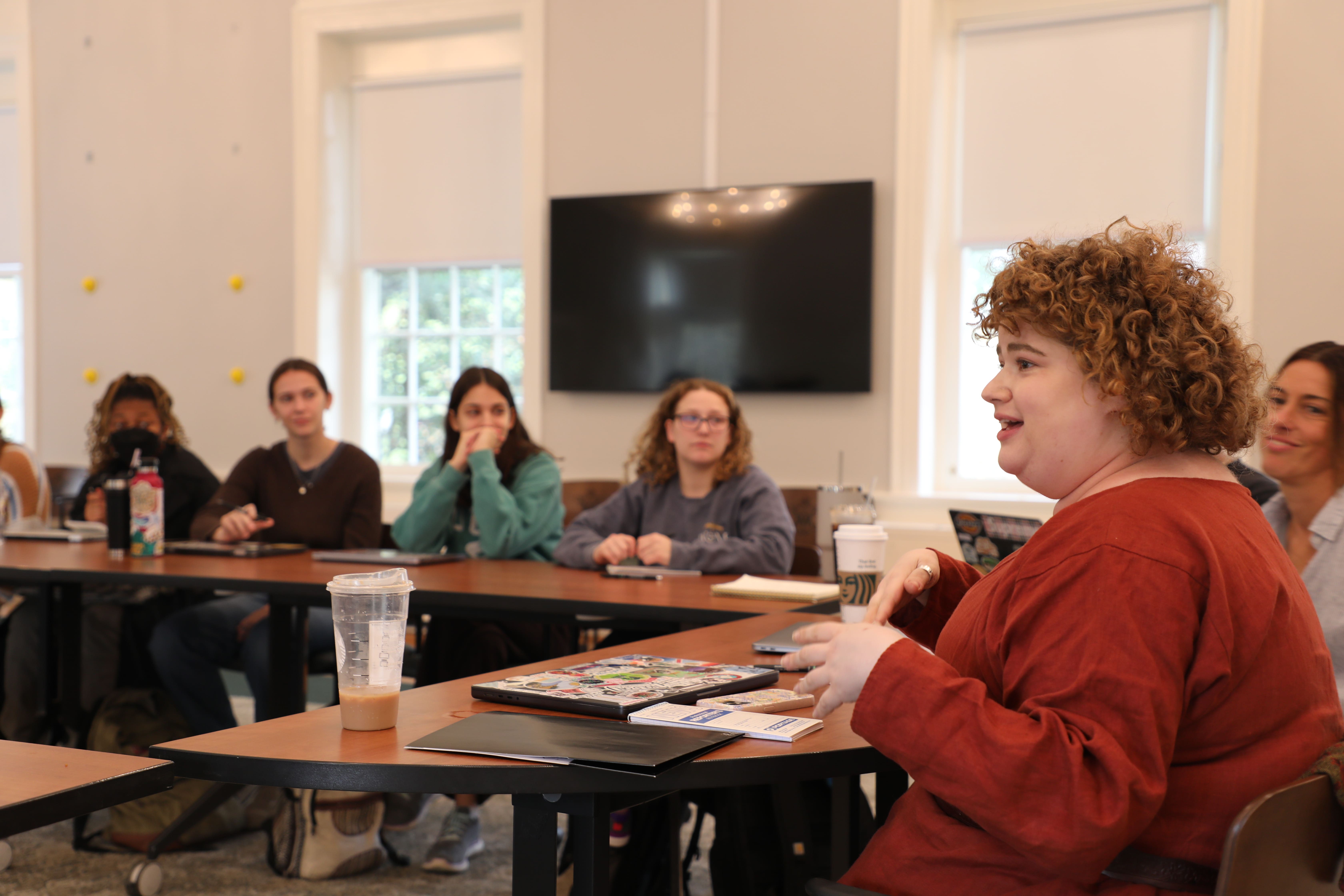 Persistence and brushing off rejection is a pre-requisite for investigative journalism. It might take fifty interviews (and as many unanswered emails and phone calls) before a story starts to gel. “And I’m interviewing my sources, visiting them at home when possible, three, ten, or maybe thirty times before I’m able to tell their stories in a way I feel good about,” she explained.
Dietz is after the long shadows, echoes of events, and repercussions that live quietly—often invisibly—in the land, air, and bodies of people.
“Looking back at our time, there will be strata of plastic, methane, and polymers left by us,” Dietz told students. “But we want to leave a greater legacy than layers of toxins. I hope I’m writing stories—true stories—that can be a part of what’s left behind.”