


News
The Faroe Islands, an archipelago between Norway and Iceland, were once believed to have been settled by Viking explorers in the mid-9th century CE. Thanks to new analysis of ancient sheep DNA, the remote, North Atlantic islands are now shown to have been inhabited by British Isle shepherds centuries before the Vikings arrived.
William & Mary’s Commonwealth Center for Energy and the Environment had its genesis about a decade ago after members of the university’s Board of Visitors expressed interest in encouraging new research, especially interdisciplinary initiatives.
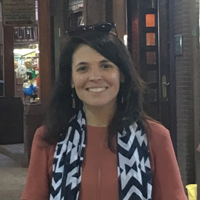
Andrea Wright, Jinlan Liu Asian and Pacific Islander American Studies (APIA) Faculty Research Award recipient, plans to use the funds to support a research project focused on the impact of green energy projects on people’s lives in India, Kuwait and Virginia.
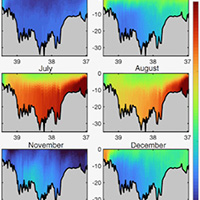
A new study by researchers at William & Mary’s Virginia Institute of Marine Science updates that trend, reveals a clear seasonal pattern, and quantifies the relative contributions to warming brought by the atmosphere, Bay tributaries, and the ocean.
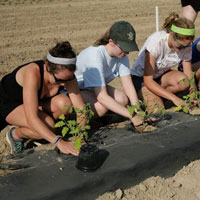
The nine-year roadmap sets out specific suggestions in key areas of the university’s multi-pronged approach to a more sustainable future.
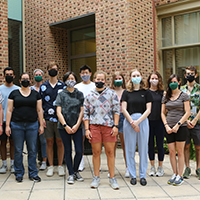
For New Yorkers, Upper Manhattan is known as the site of Grant's Tomb, the Apollo Theater, The Cloisters, Sylvia's Restaurant and Sugar Hill. For W&M chemist Rachel O’Brien, the slice of city is the ideal marine-urban interface to study changes in the Earth’s atmosphere and its potential impacts on air quality and climate.
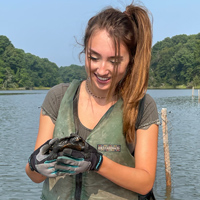
Diamondback terrapins have always found it hard to catch a break.
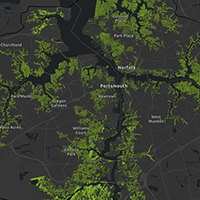
The Elizabeth River Project (ERP) has teamed with researchers from the Virginia Institute of Marine Science and William & Mary to build an online mapping tool that can help the non-profit and other community partners better incorporate environmental justice issues into planning and restoration efforts.
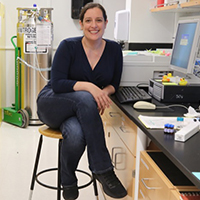
It took a pandemic for the world to understand the importance of something Rachel O’Brien has been researching for the better part of two decades.
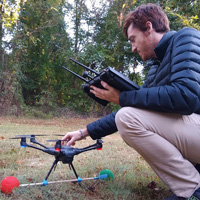
The Delmarva Peninsula, which includes Virginia’s Eastern Shore, is the avian version of a southbound interstate during the fall migration of raptors and songbirds.
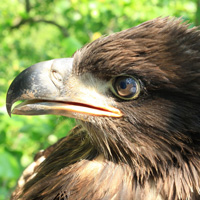
It’s a new era for bald eagles in the Chesapeake Bay drainage — and the end of an era for a veteran team of eagle researchers.
A new minor program in integrative conservation will be offered to William & Mary undergraduates as early as the fall, 2021 semester.
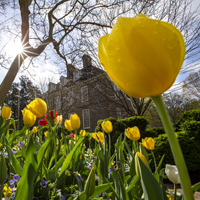
April 18 to 24 marks this year’s Earth Week celebration hosted by William & Mary Sustainability, giving the campus the opportunity to come together, listen and learn about the planet and each other.
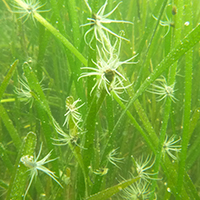
New research shows that biodiversity is important not just at the traditional scale of short-term plot experiments, but when measured over decades and across regional landscapes as well.
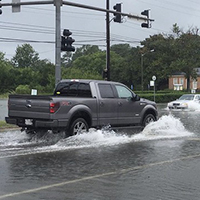
The annual update of their sea level “report cards” by researchers at William & Mary’s Virginia Institute of Marine Science adds further evidence of an accelerating rate of sea-level rise at nearly all tidal stations along the U.S. coastline.
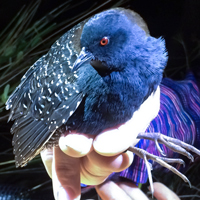
A bird that since John James Audubon’s time has scurried under the radar of all but the most attentive ornithologists, conservationists and naturalists has received protection from the U.S. Fish and Wildlife Service.
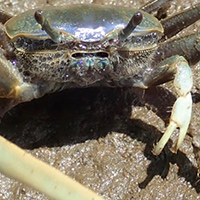
Shift to new habitat helps fiddler crabs leave some troubles behind.
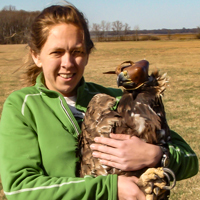
Bryan Watts, the director of William & Mary’s Center for Conservation Biology, and Fletcher Smith, a research associate at the CCB, are part of an effort to share animal-tracking data to get a handle on what is ahead for the diverse animal populations of the changing Arctic and near-Arctic habitats.
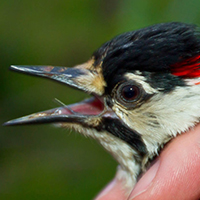
The Piney Grove Preserve has shifted from receiving red-cockaded woodpeckers from other populations to donating woodpeckers. The movement marks a milestone in the recovery of the species and is a testament to the valuable work of W&M’s Center for Conservation Biology.

A healthy diet means a healthier you, which also means a healthier planet, right? Well, it’s complicated.

William & Mary Libraries is adding a new space with people who love the outdoors in mind. The Libraries announced it will begin constructing a patio outside of Swem in December.
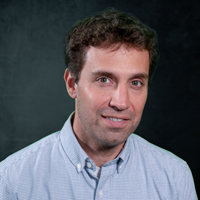
South Sawtooth Lake on Canada’s Ellsmere Island is deep, cold and filled with answers for climate-change scientists.
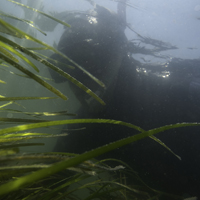
Project offers blueprint for future efforts to maintain & restore coastal habitats.
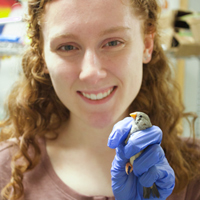
John Swaddle, faculty director at William & Mary’s Institute for Integrative Conservation, and a group of graduate students have published a paper evaluating a new window-film product designed to reduce bird-window collisions.
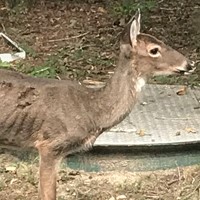
A rash of deer deaths in the College Woods is likely the result in an overabundance of biting midges, according to Randy Chambers, director of William & Mary’s Keck Environmental Laboratory.

For the past seven years, Dorothy Ibes has been using William & Mary’s outdoor space as a laboratory to understand the relationship between human health and human access to nature.