Fire Safety Topics
Overview
Candle fires are one of the few types of home fires that have increased dramatically over the past decade, and four out of ten home candle fires start in bedrooms.
Burning candles is a prohibited item (pdf) in residence halls. Candles with wicks, whether new or previously burned, are also prohibited because they still pose a potential fire hazard. Wax candles are only allowed in on-campus housing if the wick is removed. Flameless candles are an encouraged alternative.
Candle Safety Tips for Off-Campus Use
- Extinguish all candles when leaving the room or going to sleep.
- Keep candles away from flammable items, such as clothing, books, and curtains.
- Use sturdy candle holders that won't tip over easily, are made from a material that cannot burn, and are large enough to collect dripping wax. Be sure the candle holder is placed on a stable, heat-resistant surface.
- Keep candles and open flames away from flammable liquids and materials.
- Keep candles out of the reach of children and pets.
- Read and follow all manufacturer instructions carefully. Do not burn a candle for longer than the manufacturer recommends.
- Always burn candles in a well-ventilated room.
- Keep candle wicks trimmed to 1/4 inch and extinguish taper and pillar candles when they are within 2 inches of the holder. Votives and containers should be extinguished before the last half-inch of wax starts to melt.
- Keep the wax pool free of wick trimmings, matches and debris at all times.
- Keep burning candles away from drafts, ceiling fans, vents and air currents. Drafts can blow lightweight curtains or papers into the flame, where they could catch fire; this will also help prevent rapid, uneven burning, smoking and excessive dripping.
- Do not extinguish candles with water. The water can cause the hot wax to spatter and shatter glass containers.
- One of the safest ways to extinguish a candle is to use a candle snuffer, which helps prevent hot wax from spattering.
- Never use a candle as a light source when entering a closet or other small space.
- During power outages, use flashlights and avoid carrying a lit candle.
Candles may look nice, but they are a growing fire threat in our communities. Knowing about candles is key to fire safety.
Carbon Monoxide (CO) is a colorless, tasteless, and odorless compound produced by the incomplete combustion of carbon-containing materials. It is often referred to as the "silent killer" because it is virtually undetectable without using detection technology, and most people do not realize they are being poisoned. Small CO concentrations can be harmful over an extended period, while large concentrations can be harmful very quickly.
A carbon monoxide detector is a device designed to detect the presence of CO gas. They measure CO levels over time and sound an alarm before dangerous levels can accumulate, giving people adequate warning to safely ventilate the area or evacuate.
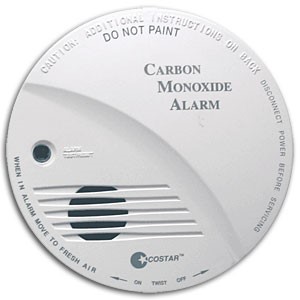
Whereas smoke detectors detect smoke generated by flaming or smoldering fires, CO detectors detect CO build-up caused by a malfunctioning fuel-burning device. In residence halls, some common sources of CO are boilers, space heaters, water heaters and blocked chimneys.
The William & Mary campus has 140 CO detectors in various locations. The batteries are changed every summer, and inventory is maintained by Facilities Management.
Overview
The Jeanne Clery Disclosure of Campus Security Policy and Campus Crime Statistics Act (Clery Act) (20 U.S. Code § 1092(f)) is the landmark federal law that requires colleges and universities across the United States to disclose information about crime on and around their campuses. The law is tied to an institution’s participation in federal student financial aid programs, and it applies to most institutions of higher education, both public and private. The United States Department of Education enforces the Clery Act. In compliance with the Clery Act, the W&M Police publish the Annual Security and Fire Safety Report.
Fire Safety Report
William & Mary’s Fire Safety Officer tracks fires that occur in on-campus housing and maintains a fire alarm log of both fires and false alarms. This log is accessible to the public upon request. The Fire Safety Officer also prepares an annual fire report for inclusion in the annual Campus Safety Report (pdf).
Avoid Recipes for Disaster
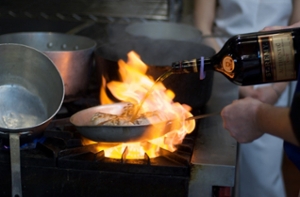
The highest percentage of campus fire alarms is from cooking in residence halls. We strive to eliminate these unwanted activations through education and hands-on training. Here are some tips to help keep you safe in the kitchen:
Use the Right Stuff
- Use high-quality cookware and utensils.
- Follow the provided cookware instructions and pay special attention to maximum oven temperatures.
- Plug microwaves, toasters and other cooking appliances directly into a wall outlet. Extension cords easily overheat and could catch fire.
Watch What You Heat
- Do not leave the kitchen while cooking, because unattended food is the primary cause of kitchen fires.
- Turn off the stove or oven if you must leave the kitchen while frying, grilling or broiling food.
- Set a timer and remain in the building if simmering, baking, roasting or boiling food.
- Do not cook while sleepy, intoxicated or on medications that make you drowsy.
Don’t Fuel the Fire
- Flammable items, such as potholders, oven mitts, wooden utensils, paper or plastic bags, food packaging, towels, and curtains, should never be placed on or near a hot surface.
- Clean the stovetop, burners and oven between uses to avoid buildup.
- Don’t allow clothing or hair to dangle over a hot surface.
Prevent & Treat Burns
- Avoid spilling or splashing hot food or liquids.
- Keep pot handles turned away from the edge of the stove and use the back burner when possible.
- When moving hot food or cookware, use oven mitts or potholders that are dry and in good condition.
- If you get burned, place the affected area under cool, running water for three to five minutes. Never treat a burn with ice. Seek medical attention for follow-up treatment.
A fire alarm system consists of a number of devices working together to detect and alert people through visual and audio signals whenever smoke or fire is present. Smoke detectors or heat detectors may activate these alarm signals. They may also be activated manually via fire alarm activation devices, such as call points or pull stations.
If a fire breaks out in your building, you can expect the smoke to spread rapidly. The fire alarm system gives you the time you need to get out. Notification devices, such as a flashing light, strobe light, electromechanical horn, or "beeper horn," provide both visual and audible alarms to alert occupants to the need to evacuate or take action in the event of other emergencies. At William & Mary, fire alarm evacuation signals typically consist of a standardized audible tone accompanied by visual notification in all public and common-use areas, as well as resident apartments. The emergency signals are designed to be distinct and understandable, thereby avoiding confusion with signals from devices such as carbon monoxide detectors or alarm clocks.
Do you know more than one way out of your building?
Check your building evacuation map for exit routes! Residence Hall occupants should ensure they know the location of their muster point.
Safety Tips
- Never assume a fire alarm is a false alarm. Evacuate immediately.
- Alert others as you exit the building.
- Close doors as you pass through them to help contain the fire.
- Proceed directly to the predetermined muster area, 100 feet from the building.
- Inform emergency responders if anyone else inside the building needs assistance.
- Remain at the muster area until the FD or PD gives the all-clear.
- Emergency Numbers: W&M Dispatch (757) 221-4596 or 911
Planned Fire Drills
The goal of workplace fire drills is to familiarize employees with emergency procedures and the location of means of egress components provided within the facility. A fire drill is a tool that we use to ensure that students, staff and faculty react properly in the event of an actual emergency.
The frequency of a fire evacuation drill depends upon the classification of a given building. The drill schedules we generally adhere to are:
- Residence Life Halls: Once per semester (4 times a year).
- Academic and Administrative Buildings: Once per year.
- Child Care Center: Once every 30 days.
Fire evacuation drills are conducted unannounced and at scheduled times when we anticipate a high number of occupants will be inside the building. Special consideration is given to high-stress times, such as exams or extensive research, that would be interrupted should alarms be activated. We discuss the drill results with the occupants at the muster point, then record the results and use the data for various applications, such as trend analyses, training development, and revisions to policies and procedures.
A portable fire extinguisher can save lives and property by either putting out a small fire or containing it, allowing people to exit the building safely.
Safety Tips
- When operating a fire extinguisher, remember the acronym PASS:
- Pull the pin. Hold the extinguisher with the nozzle
pointing away from you and release the locking
mechanism.
- Aim low. Point the extinguisher at the base of the fire.
- Squeeze the levers slowly and evenly.
- Sweep the nozzle from side to side.
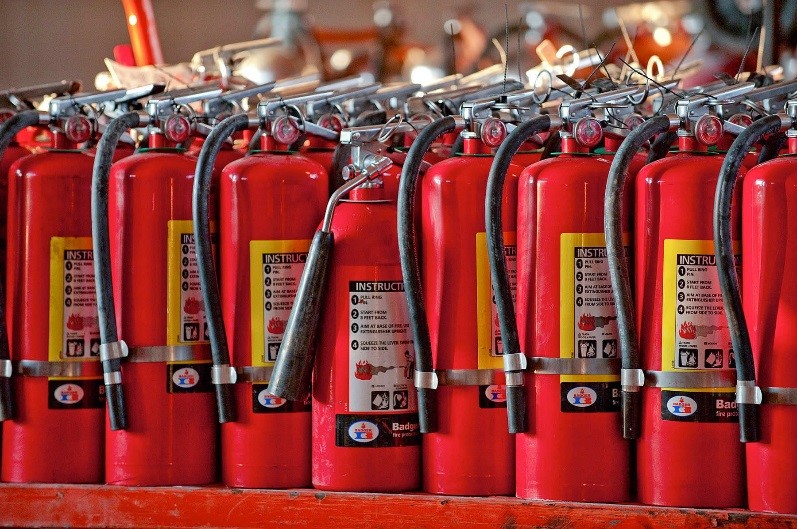
- Like any mechanical device, fire extinguishers must be regularly maintained to ensure their proper operation. The EH&S Office is responsible for overseeing the fire extinguisher maintenance program. EH&S also provides fire extinguishers upon request in support of student events. EH&S will provide a replacement fire extinguisher for your work area or residence hall if you note that an extinguisher is missing from its mounted location, has been discharged or is no longer serviceable.
- Fire extinguishers must be inspected or given a "quick check" every 30 days. Additionally, fire extinguishers must be maintained annually in accordance with local, state, and federal codes and regulations. The annual inspection consists of a thorough examination of the fire extinguisher's mechanical parts, the fire extinguishing agent, and the expellant gas. The annual inspection consists of a thorough examination of the fire extinguisher. Annual inspections are handled by the EH&S office and take place throughout the year.
How will I know if my fire extinguisher has had its annual inspection?
- If the annual inspection is current, the extinguisher will have a tag with the year stamped on it. The extinguisher is good for 12 months from the date punched on the attached tag. If you find an extinguisher that is missing a tag or the tag is out-of-date, please notify the EH&S Office immediately.
Why doesn't my extinguisher have an inspection tag for recording the monthly inspection?
Fire extinguisher inspections at William & Mary are tracked using the Campus Optics system. Each fire extinguisher has a unique barcode. Once an extinguisher inspection is complete, the inspector will scan the extinguisher's barcode. The inspector will also record any deficiencies such as a missing pin or a broken hanging bracket. Inspection records are stored in Campus Optics and are available for review upon request.
Test Your Portable Fire Extinguisher Knowledge
Interested in Fire Extinguisher Training? Contact the EH&S Office at [[safety]].
The Environmental Health & Safety Office offers a variety of fire safety training sessions. Some training sessions are offered annually, while others are available upon request. Please contact our office at [[safety]] and review our Fire Safety Topics if you are interested in setting up any of the following fire safety training sessions:
- Fire Safety Training for RAs
- Fireplace Training
- Fire Extinguisher Training
- Cooking Training
Fire Extinguisher Training
William & Mary offers comprehensive fire extinguisher training for clubs, organizations, students, and faculty, utilizing two state-of-the-art simulators that replicate real-life fire extinguisher scenarios. Our "live fire" system and live fire simulator provide hands-on training that empowers participants to respond quickly and make critical decisions during an actual emergency evacuation.
Each year, Resident Advisors (RAs), students in chemistry and biology, and laboratory staff can engage in this vital training. The session begins with a brief presentation covering essential fire safety dos and don'ts, followed by practical hands-on fire extinguisher training. Additionally, the EH&S Office provides specialized training for students, clubs, and organizations that request open burn permits. These permits allow for the safe use of grills, fire pits, and other open-flame activities.
To ensure accessibility, one of our training simulator projects a fire on a screen, allowing university office occupants — who may not be able to leave their buildings for a training session — to participate using laser fire extinguishers.
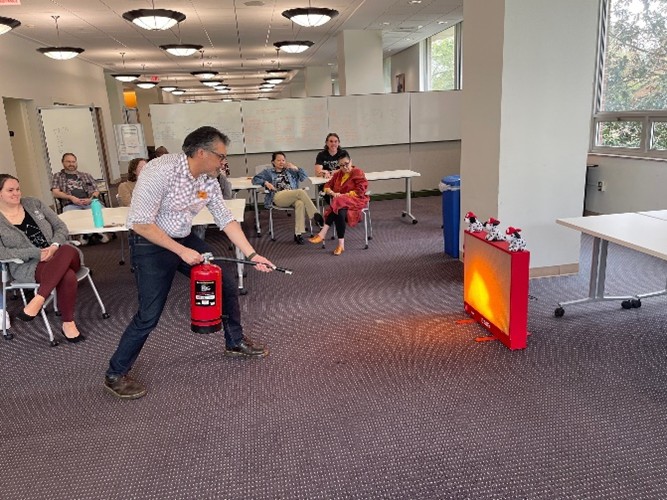
The EH&S Office provides training for both individuals and large groups. If you're interested in fire safety training, fire extinguisher training, or would like to schedule a fire drill for your building, please contact us at [[safety]].
All William & Mary fireplaces are cleaned and inspected annually by a professional chimney sweep. We take great pride in providing training to residents who have functioning fireplaces.
Safety Tips
- Keep a fully stocked array of fireplace maintenance tools, including a metal bucket and lid.
- You must use a screen that completely covers the fireplace opening to keep sparks from flying out.
- Failure to open the damper will lead to smoke and potential carbon monoxide (CO) buildup in the residence.
- Select well-seasoned wood that has been dried for a minimum of six months to a year and stored in a proper environment. Artificial logs cannot be burned in W&M fireplaces. Coal and charcoal are also prohibited due to the risk of carbon monoxide buildup.
- Avoid “roaring” fires, as they can start chimney fires from soot and create soot deposits in the flue. Large fires can lead to overheating of wall or roof materials.
- Never use gasoline, a charcoal lighter, or other fuel to light or relight a fire, because the vapors can travel the length of the room and explode. Keep flammable materials, such as carpets, furniture, paper, logs, and kindling, at least three feet away from the fireplace.
- Remove colored comic sections from the newspaper. The colored inks contain lead and can produce toxic gases. Do not burn trash or gift wrap in the fireplace, because polystyrene foam and other coated materials can generate deadly fumes.
To schedule a Fireplace Safety Class to help your occupants use their fireplace safely, contact [[safety]].
For fireworks displays conducted on state-owned property or within state-owned buildings, permits must be obtained through the State Fire Marshal’s Office. University departments must contact the EH&S Office to coordinate site location. External organizations shall contact their William & Mary sponsor for approval to host a fireworks display on campus. In both cases, the pyrotechnicians must complete and submit the Virginia State Fire Marshal’s Office Fireworks Application.
Rules & Regulations
- Plywood must be placed under all fireworks during setup to prevent damage to the turf.
- Shells must be three inches or smaller in diameter.
 All debris must be cleaned by the close of business the following day.
- The fireworks crew must arrive no later than 1 p.m. the day of the display. In
the case of an unavoidable delay, the company must notify the EH&S Office as soon as possible. - The only vehicles allowed on the launch site will be provided by theWilliam & Mary sponsoring department.
- Buildings immediately neighboring the launch site must have their windows secured to prevent breakage.
- Excessive debris from fireworks on buildings must be removed. All clean-up expenses will be the responsibility of the sponsoring department.
Overview
Hot work refers to any activity that involves burning, welding, using fire or spark-producing tools, or producing a source of ignition. Welding and cutting operations are common in everyday maintenance work. Hot work may not be performed anywhere on campus where flammable vapors or combustible materials exist. When possible, work and equipment should be relocated outside of the hazardous areas.
We ensure that fire-extinguishing equipment is readily available. Depending on the nature and quantity of combustible material, this equipment may include pails of water, buckets of sand, hoses, or portable extinguishers. It is mandatory to assign additional personnel to guard against fire while hot work is being performed.
William & Mary provides its own locally generated permits to employees trained in hot work operations in accordance with university policies. Outside contractors are required to provide their own permits in accordance with their company’s hot work program. Construction and renovation contractors are subject to their respective construction permits and adhere to their company’s hot work program. The EH&S Office verifies all permits for completion and compliance.
Resources
Guidelines
In accordance with William & Mary's Fire & Life Safety Program, a permit is required before the ignition of any open flame on state-owned property. Permit applications must be submitted in writing at least seven business days before the requested day.
Some activities that require an Open Flame/Burn Permit:
- Recognized range of wildlife management practices.
- Prevention to control disease or pests.
- Providing heat for outdoor workers.
- Campfires/fire pits.
- Artwork and/or performances involving flames.
- Cooking involving flames (indoor and outdoor).
- Torches/cressets.
- Religious ceremonies or activities involving open flames, candles or incense.
Restrictions
- Location: Fires in approved containers must be more than 25 feet from any structure. Extreme caution should be used to prevent the ignition of any nearby trees, foliage, grassland, vehicles, equipment, or any other object adjacent, above, or below the area of the fire.
- Materials: Fuel for fires must consist only of seasoned dry firewood and be ignited with a small quantity of paper. Do not use flammable or combustible liquids or gases, reactive chemicals, rubber, plastics, or other unapproved ignition methods.
- Attendance: Any open flames must be constantly attended until the fire is extinguished. The permit requester is expected to be at the permitted event to ensure adherence to the permit conditions.
- Fire suppression: One of the following, or the equivalent, must be immediately available and ready for use in the area of the fire:
- At least one portable fire extinguisher (e.g., 10-lb. ABC multi-purpose dry chemical).
- Other approved fire extinguishing equipment, such as dirt, sand, a water barrel, or a garden hose, is to be provided by the requester.
- Training: Portable fire extinguisher training is required for those supervising an open flame/burn activity. If you have not received this training, contact [[safety]] to request training.
- When required, the EH&S Office will notify the Williamsburg Fire Department to be on-site before an open burning event.